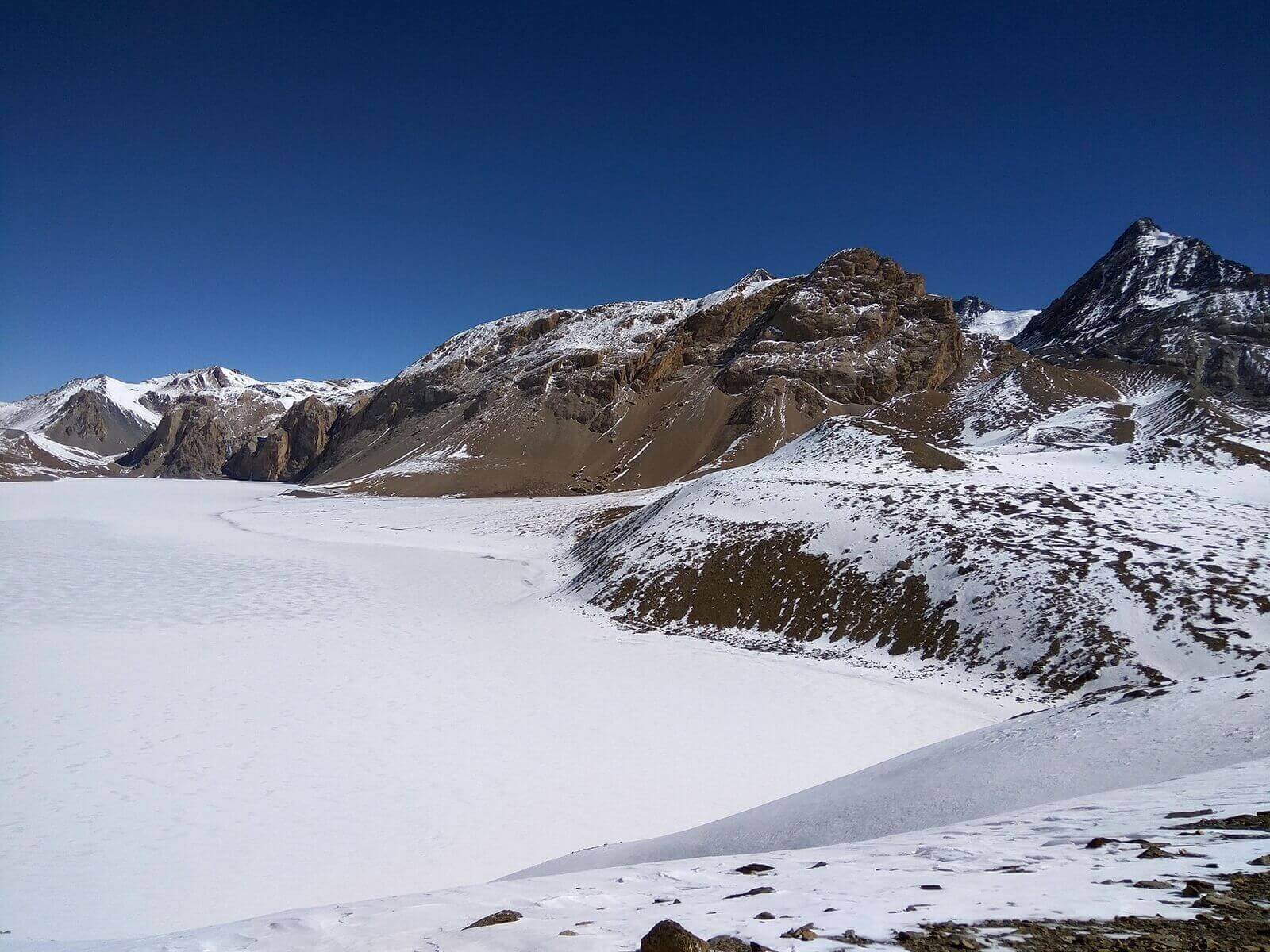
You can take part in the Nepal Tilicho Lake Trek during most parts of the year. However, it is important to note that the experience and challenges vary depending on the season of your choice. To put it bluntly, the spring (March to May) and autumn (September to November) are undoubtedly the Tilicho Lake Trek best seasons. Compared to other off periods, the months of this season offer stable weather elements, clear mountain views, striking landscapes, and most compatible factors for high-altitude traverse and Thorong La Pass crossing.
The spring season is a top contender if you are looking forward to doing this trek under pleasant circumstances. Tilicho Lake Annapurna Circuit Trek during the spring season offers a combination of stable weather, moderate temperatures, and vibrant scenery. The daytime temperatures at lower altitudes are approximately 15°C and 25°C, and as you climb higher, it can drop to 5°C to 12°C. As for the night temperatures, at the Tilicho base Camp and Thorong High Camp area, it can fall below -5°C to -10°C, particularly in March.
The lower valleys come alive with blooming rhododendron forests and fresh greenery. As for the higher part of the mountains, they remain draped in snow, especially in early spring. This season is ideal for trekkers who are seeking a classic Himalayan experience with comfortable daytime temperatures, colorful landscapes, and excellent mountain views.
-
Autumn (September to November)
Like spring, autumn is regarded as the finest trekking season in Nepal. This season takes place after the monsoon rain ends and the atmosphere becomes remarkably clear. Autumn season produces some of the best mountain visibility of the year. You can expect the daytime temperatures at low altitudes to be around 15°C and 22°C. At higher elevations, daytime temperatures dip to 6°C to 14°C, and the nighttime temperatures are around -5°C to -10°C. It can get especially cold during late November as the winter season is just at the doorstep.
The strongest allure of the autumn season is its consistency. Trails are usually dry, skies remain clear for an extended period, and it is easier to navigate the exposed sections of Tilicho Lake and Thorong La Pass. This fall season is particularly suitable for trekkers who prioritize reliability, visibility, and crossing of Thorong La Pass under favourable conditions. On top of that, major Nepali festivals like Dashain and Tihar also provide an opportunity to witness the local celebrations and cultural traditions.
-
Winter (December to February)
During the winter season, the Annapurna region transforms into a quieter region with a dramatic landscape. The lower regions remain relatively manageable with daytime temperatures hovering between 10°C and 15°C. However, the weather is considerably harsher above Manang with temperatures dipping upto 5°C to 0°C. At the higher elevations, night temperatures frequently plunge to -15°C to -20°C. So, heavy snowfall can often block the route to Tilicho Lake and even temporarily close Thorong La Pass.
As for reward, for enduring these conditions, you will be able to enjoy solitude, a rare instance in this route that touches the mainstream Annapurna Circuit Trek. Similarly, the fresh snowfall over the mountains and landscape adds an entirely different dimension to the Himalayan scenery. The overall trekking experience feels remote and intimate. Winter trekking on the Tilicho Lake Trekking route is best suited for experienced trekkers who are comfortable trekking in cold conditions and value trqnauility over convenience.
Compared to other seasons, the monsoon is considered the least favorable season for the Nepal Tilicho Lake Trek. In the lower Annapurna region, this monsoon season brings frequent rainfall, creates muddy trails, increases the risk of landslides, and often obscures the mountain views. Daytime temperatures ranged from 18°C to 26°C at lower regions, and at the higher elevations, they can drop upto 8°C to 15°C. Nights are generally colder at the higher points, with temperatures dipping to 1°C to -5°C. On the appealing side, the hills surrounding the Marsyangdi Valley become intensely green, waterfalls flow at full force, and the trekking trails are far less crowded.
Interestingly, as Mustang lies within a partial rain shadow of the Himalayas, the conditions improve considerably after crossing into the drier northern landscapes. In overall, monsoon trekking is best suited for seasoned trekkers who prioritize solitude and do not mind adapting to the unpredictable weather conditions. It can also be appealing to the repeat visitors who want to experience a different and unseen side of the Annapurna region.