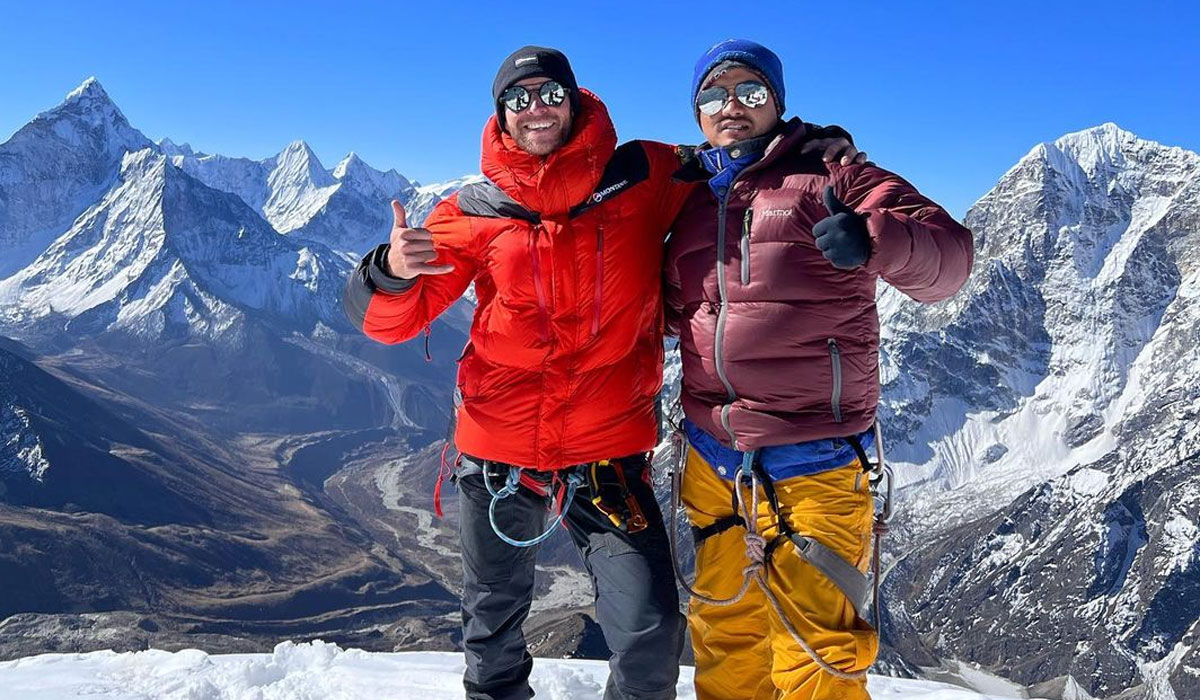
Trip ModeIn Hotels and local nice lodge with camping .
Climbing GradeTD ‘Technical Difficule’ French, Swiss Alpine Climbing Systems
Areas of TrekNepal North Mid-East at Khumbu and Everest region.
People / CulturePopulated by Sherpa tribes with ancient culture and traditional life of Buddhism religion.
Mode of TransportScenic flight from Kathmandu to Lukla and back.
Highlights of Lobuche East Peak Climbing
Scaling a true Himalayan peak, Lobuche East Peak at an elevation of 6,119 meters (20,075 feet)
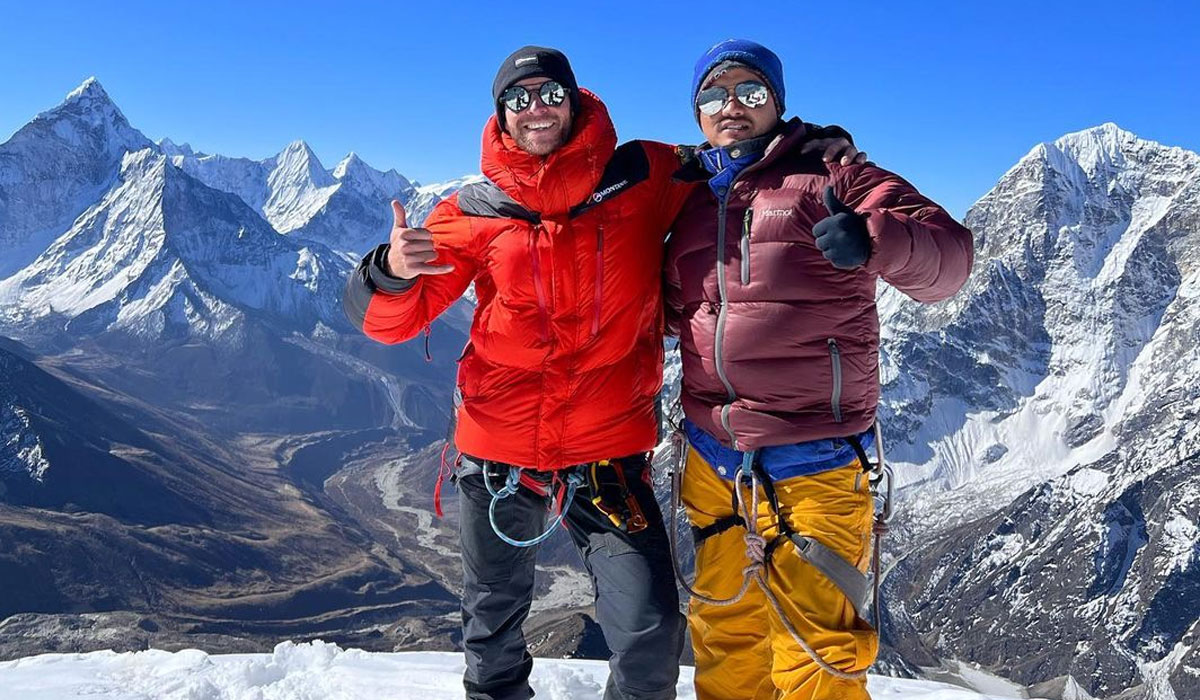
Summit panorama, which features up-close and breathtaking vistas of Everest, Lhotse, Nuptse, Ama Dablam, Pumori, and Makalu rising in every direction
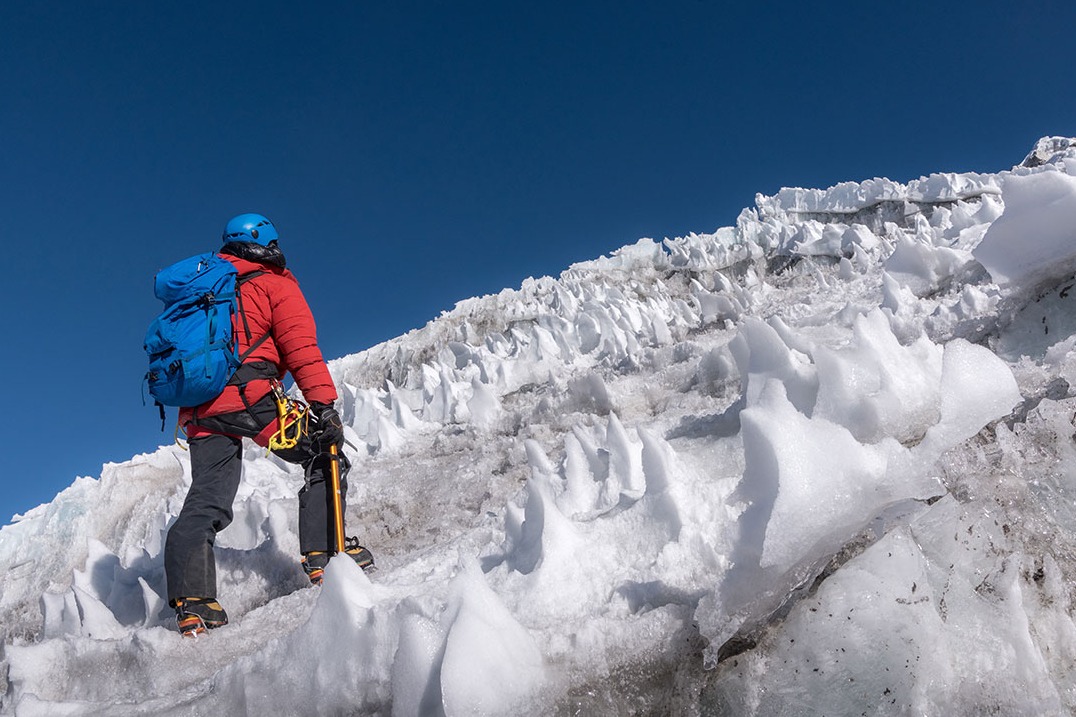
Opportunity to traverse real mountaineering terrain; glacier crossings, fixed rope ascents, and challenging 40 to 50° snow slopes
An expedition-style high camp at over 5,400 meters, which adds to the authentic alpine climbing atmosphere
Following the classic Everest Base Camp trail through Namche Bazaar, Tengboche Monastery, Dingboche, and Lobuche village
Hike to Everest Base Camp (5,364m/ 17,598ft) and Kalapathar (5,550m/ 18,208ft), two of the major gems in the Khumbu region
A quieter, more alpine-focused alternative to Island Peak Climbing
Perfect stepping stone for the aspiring mountaineers who aim to conquer other towering giants
A complete Himalayan experience where you will experience rich Sherpa culture, diverse mountain terrain and weather, push to the base of the tallest peak in the world, glacier traverse, and a true Himalayan peak summit
Trip Overview
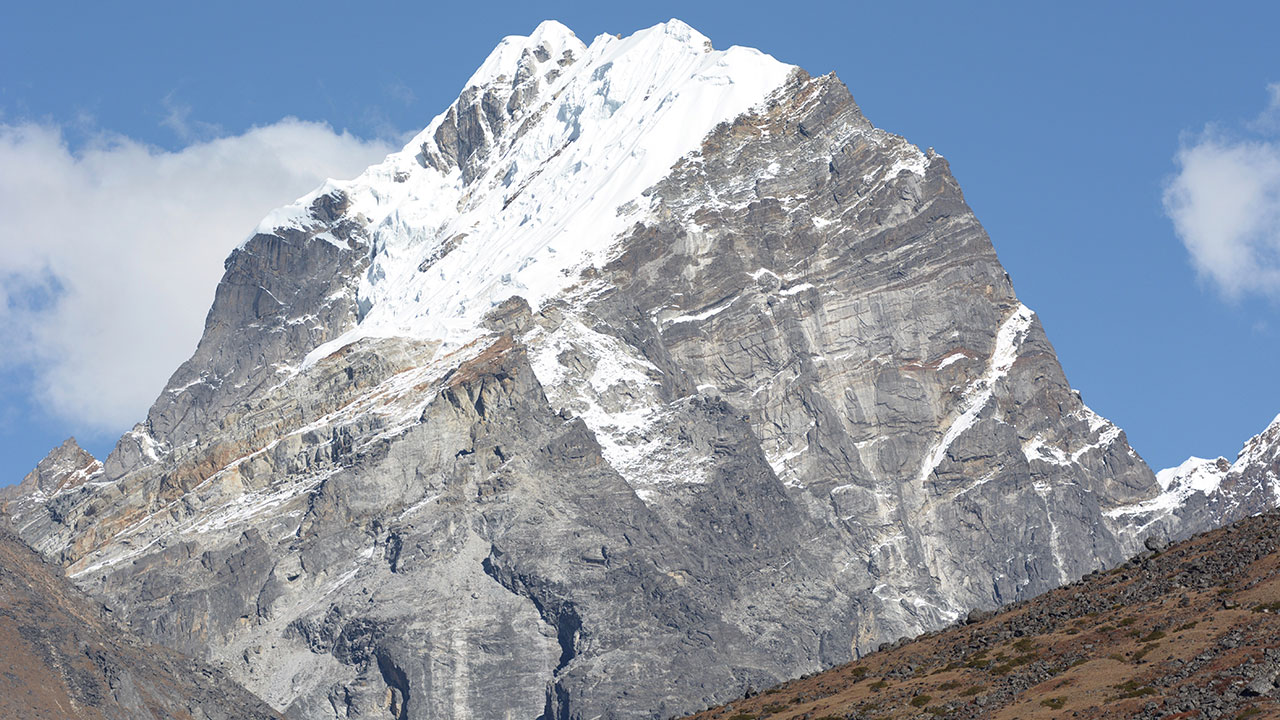
Lobuche East Peak Climbing is an incredible trekking experience in the Everest region that transforms into a true Himalayan mountaineering. Lobuche East Peak, which rises 6,119 meters (20,075 feet) above the Khumbu Valley. Although this peak is on the upper stretch of the classic Everest Base Camp trail, it offers an entirely different level of challenge and reward. From a distance, Lobuche East Peak looks sharp and commanding, a beautiful snow-capped summit framed by massive walls of Lhotse and Nuptse. But once you get close and step on its glacier, you begin to understand why it is considered one of the most rewarding peaks in Nepal.
What makes Lobuche Peak Climbing in Nepal particularly compelling is the overall journey leading up to it. The route gradually unfolds across the heart of the Khumbu Valley and takes you across cultural settlements, vibrant towns, and spiritual epicenters, windswept valleys, and alpine slopes. Unlike purely technical expeditions, this climb combines cultural immersion, high-altitude trekking, and genuine alpine terrain; fixed ropes, crevassed glaciers, and a dramatic summit ridge. The final ascent is demanding, but it is achievable with proper preparation.
You will need to overcome the snow slopes at around 40 to 50 degrees before the climb to the summit. This exposure of the summit ridge creates a real mountaineering experience without stepping into extreme expedition territory. Then, as you reach the top of the mountain, you will be rewarded with the extraordinary vista of Everest, Lhotse, Ama Dablam, and Nuptse dominating the skyline in every direction.
For the climbers who are seeking their first 6,000 meters Himalayan summit or a serious stepping stone toward a bigger objective, Lobuche East Peak Climbing is the most suitable option. This eastern Himalayan peak delivers a complete, immersive, and deeply satisfying high-altitude expedition experience.
Lobuche Peak Itinerary Plan Outline
Here is the Lobuche Peak Itinerary outline to understand how your days will unfold once you start your adventure. With the help of this table, you can have deep insights into the altitude charts, daily itinerary plans, and the distance you have to cover, as well as the estimated duration.
Day
Lobuche Peak Itinerary
Elevation Profile
Duration/Distance
01
Reach Kathmandu (1,400m/ 4,593ft) via various international airlines and transfer to the hotel
02
In Kathmandu, prepare for the trek and climb
03
Transfer to Kathmandu domestic airport for flight to Lukla (2,860m/ 9,383ft) and trek to Phakding (2,610m/ 8,562ft)
1,460m/ 4,790ft (gain)
Flight Distance: 138km/ 85 miles
Flight Duration: 35 minutes
Trek Distance: 8km/ 4.9 miles
Trek Duration: 3 to 4 hours
04
Trek to Namche Bazaar (3,440m/ 11,286ft)
830m/ 2,723ft (gain)
Trek Distance: 12.3km/ 7.64 miles
Duration: 5 to 6 hours
05
In Namche for rest to support acclimatization with a short hike
06
Trek to Tengboche (3,867m/ 12,687ft)
427m/ 1,400ft (gain)
Trek Distance: 10.7km/ 6.65 miles
Duration: 5 to 6 hours
07
Trek to Dingboche (4,410m/ 14,468ft)
543m/ 1,781ft (gain)
Trek Distance: 9.8km/ 6.09 miles
Duration: 5 to 6 hours
08
Another rest day at Dingboche for acclimatization and a local hike
09
Trek to Lobuche (4,910m/ 16,108ft)
500m/ 1,640ft (gain)
Trek Distance: 8.8 km/ 5.47 miles
Duration: 5 to 6 hours
10
Trek to Everest Base Camp (5,364m/ 17,598ft), back to Gorakshep (5,164m/ 16,942ft)
454m/ 1,489ft (gain)
Trek Distance: 11.5km/ 7.15 miles
Duration: 8 to 9 hours
11
Morning climb Kalapathar (5,550m/ 18,208ft), walk to Lobuche Peak Base Camp (4,980m/ 16,338ft)
386m/ 1,266ft (gain)
Trek Distance: 6.2km/ 3.85 miles
Duration: 5 to 6 hours
12
Trek to Lobuche High Camp (5,400m/ 17,716ft)
420m/ 1,377ft (gain)
Climb Distance: 4km/ 2.4 miles
Climb Duration: 4 hours
13
Summit on Lobuche East Peak (6,119m/ 20,075ft) and back to Base Camp
719m/ 2,358ft (gain)
Climb Distance: 6.5km/ 4 miles
Climb Duration: 8 to 9 hours
14
Spare and Contingency day in case of bad weather problems
15
Trek to Pangboche (3,900m/ 12,795ft) past Pheriche (4,230m/ 13,877ft)
1,080m/ 3,543ft (loss)
Trek Distance: 14.5km/ 9 miles
Trek Duration: 6 to 7 hours
16
Trek to Namche Bazaar (3,440m/ 11,286ft)
460m/ 1,509ft (loss)
Trek Distance: 13.8km/ 8.57 miles
Duration: 6 hours
17
Trek to Lukla (2,860m/ 9,383ft)
580m/ 1,902ft (loss)
Trek Distance: 17.9km/ 11.1 miles
Duration: 6 to 7 hours
18
Fly back to Kathmandu (1,400m/ 4,593ft) and transfer to hotel
1,460m/ 4,790ft (loss)
Flight Distance: 138km/ 85 miles
Duration: 35 minutes
19
Reserve day in Kathmandu with individual activities
20
Depart Kathmandu for international departure homeward bound
Cost Details
What's Included in Lobuche East Peak Climbing
Airport pickup and drop by private vehicle.
Two night tourist standard twin sharing Hotel in Kathmandu with breakfast.
Three meals a day (Breakfast, Lunch and Dinner) during the trek.
Fresh fruits every night after the dinner.
Trekking lodge (Tea House) accommodations during the trek.
All necessary paper works Sagarmatha National park entry permit & Trekker`s information Management System (TIMS) permit.
Peak climbing permit and other necessary fees.
Camping tent and climbing rope provided.
Both way flight (Kathmandu-Lukla-Kathmandu) including airport tax and pickup and drop.
A highly experience, helpful, knowledgeable, friendly , English speaking well trained, Government license holder climbing Sherpa, with all his salary, food, drinks, accommodation, Transport and insurance.
Strong, helpful porters with proper equipment (1 porter = two people) with all his salary, food, drinks, accommodation and insurance.
Comprehensive medical supplies (first aid kit will be available).
Arrangement of Emergency Helicopter service (paid by your Travel insurance company).
Use of sleeping bags, Down Jacket and Duffel bag (to be returned after the trip).
Government taxes and official expenses.
Guided Kathmandu sightseeing tour with private vehicle as per itinerary.
Ox-meter to check your pulse and oxygen saturation and heart rate twice daily (Very useful to check Altitude Mountain Sickness(AMS) symptoms) Which will ensure you trek is in the safest hands possible for all levels of trekker.
Assistant guide group size above 4+ person.
What's Excluded in Lobuche East Peak Climbing
Meals whilst you are in Kathmandu Lunch and dinner.
Nepal entry visa.
Your Travel and medical insurance.
International airfare.
Your personal expenses.
All the alcoholic and nonalcoholic cold and hot drinks on trek (i.e. those you choose to purchase along the way and during evenings in the Tea Houses)
Desserts Sweet things like chocolate, cake, pie, pudding.
Battery charging and hot shower on the tea houses.
Personal climbing equipment can be hired $160 USD per person.
Kathmandu sightseeing tour entrance fees. (25$)
Extra hotel in Kathmandu.
If you required extra days for trekking and climbing 75$ per day.
Excess baggage more than 15 kg to Lukla flight.
Single supplementary 450 $.
Price & Availability
Group Discount Available
1 Person
US$ 2450
2 - 5 Person
US$ 2250
Itinerary of Lobuche East Peak Climbing - 20 days
Day 01
Reach Kathmandu via various international airlines and transfer to the hotel.
Accommodation: Hotel
Place: Kathmandu
Altitude: 1400 Meters
On the first day of the 20-day Lobuche East Peak Climbing, you will land in Kathmandu. Our team will receive you at the Tribhuwan International Airport of Kathmandu. Then we will transfer you to a hotel in the city for the day. Many other members who will travel with you will join. Make sure you get enough rest and fight off the jet lag.
Later in the day, our team and we will host a briefing session, including all details of the trek. We will also let you know about the history and culture of the local Sherpa community that you will meet during the trek. You will also be served with a welcome dinner with amazing local Nepali cuisine.
Max. Elevation:1400
Duration:30 min
Day 02
In Kathmandu, prepare for the trek and climb.
Accommodation: Hotel
Place: Kathmandu
Altitude: 1400 Meters
Before starting the trek, we will have a day for preparation. We will not travel today but rather be in Kathmandu and explore the region. You can observe the various cultural heritage sites and tourist sites early in the morning. Our team will assist you with vehicles and guides. As there are many historical places to visit in Kathmandu, you can choose your places so you can explore there.
After you are done, get back to the hotel. We will also ensure you make preparations for your trek and climb during the day. You will again have time to yourself in the evening before we leave Kathmandu the next day.
Max. Elevation:1400
Day 03
Transfer to Kathmandu domestic airport for flight to Lukla and trek to Phakding
Destination Place: Phakding
Altitude: 2610 Meters
Time taken - Half an hour flight and 4 hours trek
Today will be the official start of our trek. The day will be divided into two travel journeys. First, we will take a domestic flight from Kathmandu to reach Lukla. It will be a short (around 35 minutes long) scenic flight over the mountains. Lukla is a Sherpa town that shows you mountains like Naulekh Himal and Kongde Peak. It is the starting point of many treks in the Khumbu region.
After arriving at Lukla, we will begin our trek. We will walk across alpine woodlands alongside the Dudh Koshi River and head down to a village called Choplung. We then come to the Dudh Koshi river valley and its gorge and then find the hamlet of Phakdingma. This will be the first point of an overnight stay on our trek.
We will transfer into a local tea house or lodge at the place and call it a day.
Max. Elevation:2860
Duration:45 min
Distance:138km
Day 04
Trek to Namche Bazaar
Destination Place: Namche Bazaar
Altitude: 3440 Meters
Overnight: Namche Bazaar
We will head to the town popularly known as the gateway to Everest. We will make an uphill walk from Phakding and follow the river, passing several Sherpa hamlets. There will be a few up-and-down treks and some suspension bridges to cross. Then we will arrive at the village of Monjo. Here, you will enter the protected area of the Sagarmatha National Park.
Then we find ourselves in a village called Jorsalle from where we will cross a bridge. The trail will also include massive pine and rhododendron trees. Roads will be winding, and views of peaks like Kongde, Kusum, Khanguru, and Thamaserku will be visible.
After around 6 hours of trek, we will finally arrive at the town of Namche Bazaar. The place will give you glimpses of Everest and houses many hotels, restaurants, bars, and pubs. The world’s highest-altitude Irish pub lies here. You can explore these places and buy souvenirs for people back home while you are here. We will stay here for the night and mark the end of day four.
Max. Elevation:3440
Duration:6-7 hrs
Distance:11km
Day 05
In Namche for rest to support acclimatization with a short hike.
Acclimatization in Namche Bazaar
Today will be a day for acclimatization and rest. Trekking to higher altitudes means you are susceptible to altitude-related sicknesses. So, taking days to acclimatize and staying at the same altitude is necessary. You can spend the day exploring the beautiful town further.
We will take a short hike to the Everest View Hotel today. This walk is great for getting amazing glimpses of peaks like Everest and Ama Dablam. We will also visit a local museum to learn more about the culture, wildlife, and lifestyle of the Khumbu region. You will have plenty of free time in the evening. You can explore the town on your own too. We will get back to the place of our overnight stop and call it a day.
Max. Elevation:3440
Day 06
Trek to Tengboche
Destination Place: Tengboche
Altitude: 3867 Meters
Overnight: Tengboche
After two days in Namche, we will continue our trek today. The destination today is Tengboche. We will start with a short uphill walk and go further to a broader trail. It will open views of Everest, Ama Dablam, and many other peaks in the region. Then, the route leads to a downhill walk towards a jungle that goes towards the Imja Tse River. You will reach a small hamlet called Phunke-Tenga.
Then, the trail leads to yet another forested area that gives vistas of Kangtenga-Tharmasarku and other mountains. You will then reach an open plateau housing a vibrant Buddhist monastery. You will find many monks and priests involved in religious activities here. This will be the Tengboche monastery and the palace housing it will be our day’s stop, Tengboche.
The place perfectly reflects the richness of both nature and culture of Khumbu. Along with the Buddhist lifestyle, you can also see amazing vistas of nearby peaks. The place lies amidst the alpine woodland filled with pine, fir, oak, rhododendron, birch, and magnolia trees. They make Tengboche a cozy haven and an amazing spot for overnight stops.
Max. Elevation:3867
Duration:5-6 hrs
Distance:9km
Day 07
Trek to Dingboche
Destination Place: Dingboche
Altitude: 4410 Meters
Overnight: Dingboche
The next step in our journey is Dingboche. We will start the journey for the day by watching the nearby mountains through a downhill walk. We will again walk to the forests of the Himalayan trails and reach the Imja Tse River. You ought to cross the steel bridge over the river to reach the other end.
Now, we will enter the barren part of the journey, leaving behind the vegetation line. This will be the hamlet of Pangbohce. This is almost the last residential area before we reach the Everest Base Camp region. We will, however, find lodges in our day’s stop. We will head some trails up and down to a river. A short climb for an hour from the river will lead us to Dingboche at the Imja Tse Valley. The hamlet welcomes you with vistas of the Island Peak in the east.
Max. Elevation:4410
Duration:6-7 hrs
Distance:8km
Day 08
Another rest day at Dingboche for acclimatization and a local hike.
Acclimatization in Dingboche
Today will be another day to adjust your body to the increasing altitude. We will spend the day in Dingboche again. However, we will take a small hike nearby to utilize the time we have. The hike today will be towards Nakarjun Hill, which is popular for its amazing views of the surrounding peaks and the Ima Tse Valley.
After our day’s hike, we will get back to our lodge. The next day, our trek will continue.
Max. Elevation:4410
Day 09
Trek to Lobuche
Destination Place: Lobuche
Altitude: 4910 Meters
Overnight: Lobuche
Day nine will be a journey to another Sherpa hamlet known as Lobuche. We will start with a morning stroll that culminates in a brief ascent. It will lead us to a ridge designated by Buddhist prayer flags and several memorials. Additionally, there are vistas of nearby high peaks and a decent gentle hiking trail.
Our path winds over the valley of Pheriche, providing views of the Taboche and Cholatse peaks. The trek then stops at a little location in Thugla, where the enormous Khumbu glacier melts and flows into a torrent river.
Following, we will cross a bridge, ascend to Thugla, and pause for potential lunch and relaxation. After that, we begin our ascent towards Lobuche. We will ascend to a ridge top where there is a memorial commemorating the unfortunate death of mountaineers in Khumbu.
From this point, we will make a short uphill walk to reach the day’s stop, Lobuche. The hamlet lies in a corner of a broader valley that lies in the foothills of Lobuche West and Lobuche East.
Max. Elevation:4910
Duration:4-5 hrs
Distance:7km
Day 10
Trek to Everest Base Camp, back to Gorakshep
Destination Place: Everest Base Camp and Gorakshep
Altitude: Everest Base Camp(5364m), Gorakshep(5164m)
Overnight: Gorakshep
Our journey today brings us to Everest Base Camp, one of our primary destinations for the trip. The morning trek goes along a level valley and climbs gradually to get farther. Then, we will climb steeply to a ridge that is close to the Khumbu glacier.
The walk continues across ice and rocky moraines. We will reach a picturesque region at the bottom of Gorakshep. It is situated at the foot of Kalapatthar and Mount Pumori on the road to Everest base camp. In this dry, high-altitude atmosphere, we take a little break to collect our breath.
Now, we will follow the lead of our guides as they take us to the much-anticipated destination of Everest Base Camp. A short walk towards the east will land us there. You get welcomed by mesmerizing views of the glaciers and icefalls of Khumbu. This scene will be more beautiful as the horizon is covered with summits of Lhotse, Everest, and Nuptse.
After having an exciting experience at the base camp, we will be walking back to Gorakshep. This will be the place for our overnight stay.
Max. Elevation:5164
Duration:2-3 hrs
Distance:4km
Day 11
Morning climb Kalapathar, walk to Lobuche Peak Base Camp
Destination Place: Lobuche Peak Base Camp
Altitude: Kalapatthar(5550m),Lobuche Base Camp(4980m)
Overnight: Lobuche Peak Base Camp
We climb the hilltop of Kalapathar which is located as high as 5,550m above the sea level. It’s the highest point of the adventure, you can enjoy magnificent views of mountains with Mt. Everest at close distance.The place gives amazing vistas of the Khumbu region’s mountain range.
After enjoying views, we descend back to Gorakshep for breakfast and continue walk to Thugla. After that, head towards the Lobuche East Peak’s Base camp. This will be the overnight stay spot.
Max. Elevation:5550
Duration:1hr
Distance:1.2 km
Day 12
Trek to Lobuche High Camp
Destination Place: Lobuche Peak Base Camp
Altitude: 5400 Meters
Overnight: Lobuche east camp on tent
Today, we will continue our climb up the Lobuche East Peak. Early in the morning, we will walk uphill, and we will easily reach the Lobuche High Camp. The rest of the day, we will prepare you for the climb. Our guides will brief you about incoming challenges and how you will be able to overcome them. We will then be fit to summit the peak the next day.
Max. Elevation:5400
Duration:4 hrs
Distance:4km
Day 13
Summit on Lobuche East peak and back to Base Camp
Destination Place : Summit on Lobuche East Peak
Altitude: 6119 Meters
Overnight: Lobuche Base Camp
We will set out early in the morning to climb through stretches of ice and snow. Then, navigate difficult, steep areas before climbing even higher to reach the peak of Lobuche Peak. Eventually, after reaching the summit, following a tough portion of the ascent. Enjoy wonderful vistas looking out over picturesque valleys and mountain ranges. After that, we will securely return to base camp for the night.
Max. Elevation:6119
Duration:8 hrs
Day 14
Spare and Contingency day in case of bad weather problems.
Contingency Day
As being in higher altitude we might have problem with weather so for precaution we might need reserve day to complete the summit. We will reserve an extra day in case we might have to stop due to bad weather. As its all about the nature, on an any circumtances we must stop climbing in the peak.
Max. Elevation:5400
Day 15
Trek to Pangboche past Pheriche
Destination Place: Pangboche
Altitude: 3900 Meters
Overnight: Pangboche
As after the great experience on the summit of Lobuche East Peak and other destination has been reached its time to get back to initial destination we will go to Pangboche. This will take you with beautiful places on the way to Pangboche. We will make our way back as we walk downhill to the Pheriche valley. Then we cross a small bridge and make a descent to reach the Pangboche village. This will be the place for our overnight stop.
Max. Elevation:3900
Duration:5-6 hrs
Distance:11.6km
Day 16
Trek to Namche Bazaar
Destination Place: Namche Bazaar
Altitude: 3440 Meters
Overnight: Namche Bazaar
Today, the trail will be same as we have already walk to Namche Bazzar. We will be looking familiar with the places as we already step in this trail. We will retrace our steps back to Naamche Bazaar. We will head to the hamlet of Tengboche from Pangboche. We will again pass through vibrant monasteries and lush forests. After a few downhill and uphill walks, we will reach the scenic trail, joining us to Namche Bazaar.
Max. Elevation:3440
Duration:5-6 hrs
Distance:10km
Day 17
Trek to Lukla
Destinaion Place: Lukla
Altitude: 2860 Meters
Overnight: Lukla
On the last day of the trekking, we will have a lengthy 6-hour walk back to Lukla. We will begin with a strenuous descent to get to a river valley. Then, enter Sagarmatha National Park and depart to Monjo Hamlet. After that, the hike passes Phakdingma and up one last little hill to the final overnight stop in Lukla.This will be the last day on Khumbu Region. The final day will be nuch more fun as after all those obstacle faces during the trail as conquer our dream to complete the Lobuche East Peak, we will free relaxed as finally we did it.
Max. Elevation:2860
Duration:6-7 hrs
Distance:19km
Day 18
Fly back to Kathmandu and transfer to hotel.
Destination Place: Kathmandu
Altitude: 1400 Meters
Overnight: Hotel in Kathmandu
We will take the same domestic flight we took earlier in our journey to get back to Kathmandu. The plane will take us from the Tenzing Hillary terminal of the airport to TIA in Kathmandu. Then, you will be transferred to your respective hotels for the day.
As we reached in Kathmandu, we can go with same itinaries as planned or you can choose yourself with other plan. This means you are free to go anywhere you like or can be prepared for other adventure with us. We are always ready to make you happy and do best on your wish.
Max. Elevation:1400
Duration:45min
Distance:138km
Day 19
Reserve day in Kathmandu with individual activities.
Explore Kathmandu
If you wish to explore more of Kathmandu, today is the day. We have kept a reserve day in case you wish to visit sites around Kathmandu with the help of our team. This day could also count for contingency in case of bad weather and flight delays in Lukla.
Max. Elevation:1400
Day 20
Depart Kathmandu for international departure homeward bound.
Final Day
Today, you will leave Nepal and head back to your home. You will return with amazing memories of the adventures in Nepali Himalayas. Our team will drop you off at the airport for your departure.
As we promise of helping you with all the necessity required on this trip, we hope you enjoyed a lot. And in future we would like to see you again with other adventure to explore we Eco Holidays nepal are always ready for it.
Max. Elevation:1400
Duration:30 min
If the provided schedule isn't suitable for you, we can create personalized travel arrangements.
Lobuche East Peak has been classified as a ‘trekking peak’ by the Nepal Mountaineering Association (NMA). This peak is one of the most popular and less technical options for aspiring mountaineers. However, in the trekking peak class, the Lobuche East Peak climbing is more on the demanding side. You will need to understand basic mountaineering skills such as using crampons, an ice axe, and fixed ropes. So, in overall, the Lobuche Peak Climbing difficulty is at a moderately technical level, which demands basic skills, strong legs, and a good level of stamina.
In the alpine grading system, the difficulty of Lobuche Peak Climbing is at PD+ (Peu Difficile Plus) level. Meaning, the climb is a little more demanding than the regular trekking peaks. PD+ difficulty reflects the necessity of the glacier travel, steep snow and ice, exposed ridgelines, and real high-altitude pressure. Technically, Lobuche East Peak is more demanding than peaks like Mera Peak because it is steeper and has more varied terrain. After leaving the high camp, climbers have to traverse across the rocky and glaciated terrain before reaching the steep slopes.
There is also a significant steep headwall section on the standard Southeast Ridge route, which is angled at 45 to 50 degrees. This section of Lobuche Peak Nepal is often referred to as the crux of the expedition. It is a steep snow and ice section just beneath the final summit ridge. Climbers need to use fixed ropes here and have knowledge of using jumars and descend with proper rope techniques to conquer this part.
Yes, in comparison to major Himalayan peaks above 7,000 meters, Lobuche Peak Climbing in Nepal is less complex and does not require advanced-level skills. However, at the same time, it is also significantly more technical than a standard high-altitude trekking route. Lobuche Peak sits in the middle ground, which can be taken as a true introduction to Himalayan mountaineering.
Best Time to Trek Lobuche Peak Nepal
Choosing the right season for the Lobuche East Peak Climbing is not just about comfort. As a matter of fact, your choice of the season directly affects the summit's success rate, safety, and overall experience. The weather in the Everest region changes dramatically with seasons and at altitudes above 6,000 meters, even small changes in wind or temperature can make a huge difference. In overall, the best time to climb Lobuche Peak is during the pre-monsoon, spring (March to May), and post-monsoon, autumn (September to November) seasons.
Spring (March to May)
Spring is widely considered a prime season for Lobuche Peak Climbing. The weather starts to stabilize after winter, and the mountain weather becomes more predictable. Daytime temperatures at the lower elevations are comfortable, while the summit temperatures remain cold but still manageable with proper gear. One of the major advantages of climbing Lobuche Peak in spring is the stable snow conditions.
The snow on the peak is generally consolidated, which makes crampon travel more secure. Likewise, the winds are usually lighter, and visibility tends to be excellent. So, you will be able to enjoy the stunning panoramic views of Everest, Lhotse, Nuptse, Ama Dablam, and other surrounding peaks without any obstacles.
Autumn (September to November)
Autumn season is another excellent season for Lobuche Peak Climbing. After the monsoon season, clear the dust and pollution, and the autumn season starts with full swing. The skies become exceptionally clear, and visibility during the mid part of the season can be quite stunning. The temperatures in the autumn season are slightly cooler than in spring, especially at night. However, the conditions in overall are generally stable.
Snow levels on the mountain can vary depending on how heavy the monsoon was. Sometimes there can be less fresh snow on the upper slopes compared to spring. The autumn season tends to feel slightly less crowded than the peak spring season. Some climbers prefer this factor for a quieter experience on the summit day.
Seasons to Avoid (Monsoon and Winter)
For a smooth and comfortable experience, it is best to avoid off-seasons such as winter (December to February) and monsoon (June to August). The winter season brings extreme cold, heavy winds, and harsh summit conditions. The temperatures at higher points can drop below –20°C. Likewise, the wind chill can make the climbing dangerous. Although winter climbing is not completely impossible, it demands more experience and preparation.
As for the monsoon season, it is generally considered unsuitable due to heavy rainfall at lower elevations, poor visibility, unstable snow conditions at higher altitudes, and the increased risk of avalanches as well as crevasses. That’s why it's best if you align the Lobuche Peak Climbing in Nepal with peak seasons and avoid the monsoon and winter for the best value experience.
Packing List for Climbing Lobuche Peak
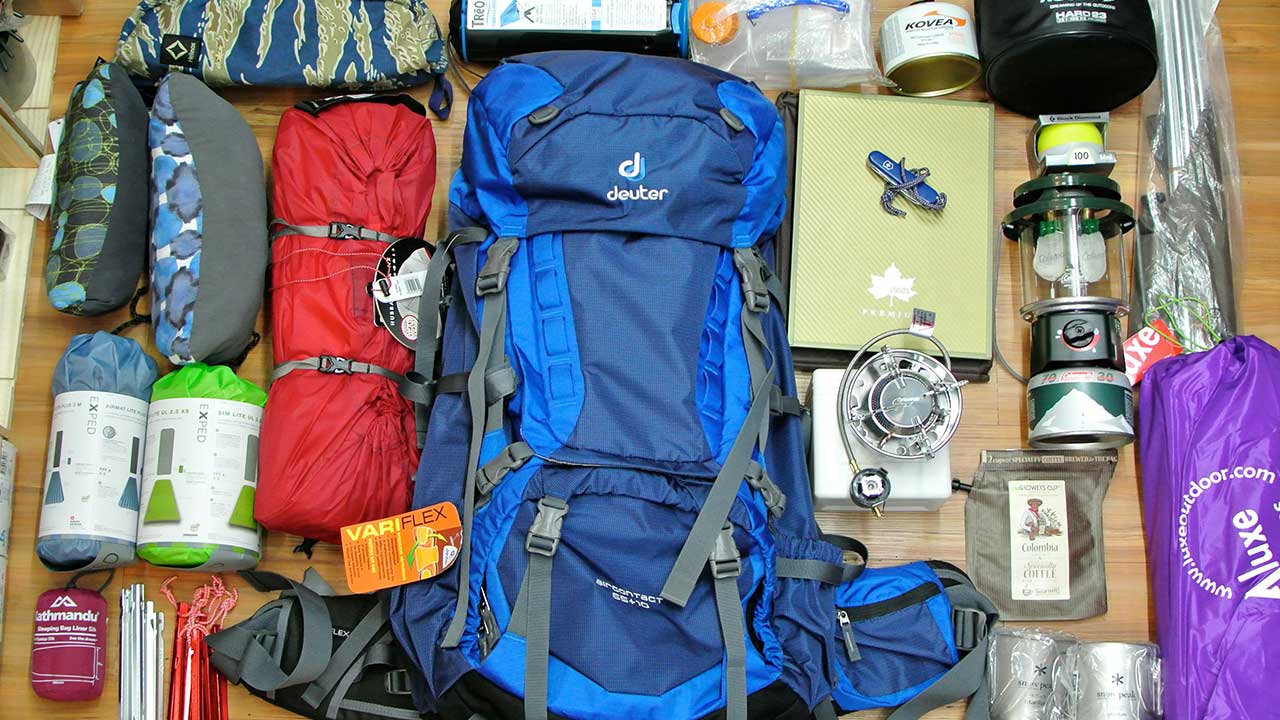
Lobuche East Peak Climbing is an incredible journey that transitions from trekking into true alpine mountaineering. Above the altitude of 5,000 meters, the comfort turns into survival, and a poor packing decision can become a serious liability that will affect your experience. Your gear should be able to support endurance, technical movement, and protection against the weather shifts. Remember, the goal is not carry more, but it is to carry smart.
Here is a practical and expedition-ready packing list for climbing Lobuche Peak that you can use as a reference list:
Clothes
Moisture-wicking thermal top
Moisture-wicking thermal bottom
Sports underwear (quick-dry)
Fleece jacket or grid fleece
Lightweight insulated jacket (synthetic or light down)
Trekking boots (if using separate boots for approach days)
Crampons (properly fitted and tested before the expedition)
Gaiters (for snow and ice protection)
Camp shoes or sandals
Microspikes (optional for icy lower trails in colder seasons)
Personal Hygiene and Essentials
Sunscreen (SPF 50+ high-altitude formula)
Lip balm with SPF
Personal first-aid kit
Pain relievers
Blister kit
Hand sanitizer
Wet wipes (biodegradable)
Toothbrush and small toothpaste
Quick-dry towel
Nail clipper
Toilet paper
Prescribed altitude medication (if advised by doctor)
Female hygiene products
Energy gels, bars, nuts, and high-calorie snacks
Trekking and Climbing Gear
Ice axe (appropriate length)
Climbing harness
Climbing helmet
Jumar/ascender
Belay/rappel device
Locking carabiners
Non-locking carabiners
Safety slings
Safety tether
Trekking poles
Summit backpack
Duffel bag (for porters/yaks)
Four-season sleeping bag (rated at least -15°C to -20°C)
Sleeping bag liner
Headlamp with spare batteries
Insulated water bottles
Thermos flask
Water purification tablets or a filter
Electronics and Miscellaneous
Power bank (10,000–20,000 mAh)
Charging cables
Universal travel adapter
Camera
Extra memory cards
Lightweight notebook and pen
Passport copy and permits
Small dry bags (for organizing gear)
Duct tape (gear repair)
Multi-tool or small knife
Accommodation and Food During Trek
One of the biggest advantages of the Lobuche East Peak Climbing is that this approach follows the classic Everest Base Camp Trek trail. So, until you move to Lobuche Base Camp and High Camp, the trek is supported by a well-established teahouse network. From Lukla to Lobuche Village, your accommodation will be primarily in traditional Himalayan teahouses. These establishments are simple but functional and are run by the local families.
The rooms in the teahouses are usually twin-sharing with simple beds, mattresses, pillows, and blankets. Heating is typically provided in the dining hall through a wood stove, especially during the colder evenings. As you climb to higher altitudes, the facilities become more basic. Bathrooms are generally shared, and hot showers may be available for an additional cost. From the Lobuche Base Camp, the accommodation transitions to tented camping instead of teahouses.
Expedition tents will be set up by your expedition for sleeping, dining, and kitchen use. At Lobuche High Camp (5,400m/ 17,716ft), the conditions are more exposed and minimal. For this part, small high-altitude tents are used, focused on safety and efficiency rather than comfort.
Food During the Trek and Climb
The food on the high-altitude trekking routes is built around a simple principle: fuel the body efficiently on the rising trails. As you climb higher, your body starts to burn more calories while your appetite naturally decreases. The available meal options here focus on carbohydrates for energy, moderate protein for recovery, and constant hydration to support acclimatization. The menu list shrinks, and available options become simpler. However, they remain warm, filling, and nourishing.
Here is how the food is generally structured along the trek and during the climbing phase:
Breakfast Menus
Porridge (oats, millet, buckwheat)
Muesli with hot or cold milk
Cornflakes
Tibetan bread with butter, jam, or honey
Toast
Chapati
Pancakes (plain, apple, banana, chocolate)
French toast
Scrambled, boiled, or fried eggs
Omelets (cheese, vegetable, or mixed)
Hash browns
Fried potatoes
Baked beans
Sausage (mostly in lower villages)
Fresh fruit (Namche & lower elevations)
Lunch and Dinner
Dal Bhat (rice, lentil soup, vegetable curry, pickles)
Fried rice (vegetable, egg, chicken at lower altitudes)
Chowmein
Spaghetti or macaroni
Vegetable pasta
Tuna pasta (lower villages)
Sherpa stew
Thukpa
Momos (vegetable, cheese, or chicken lower down)
Boiled potatoes
Potato curry
Spring rolls
Pizza (lower elevations like Namche or Dingboche)
Soup (garlic, tomato, mushroom)
Vegetable sandwiches
Yak cheese (local specialty)
Hot vegetable soup (common at Base Camp)
Beverages
Tea (black, milk, ginger, lemon)
Honey lemon ginger tea
Green tea
Masala tea
Coffee (instant or filtered, lower down)
Hot chocolate
Garlic soup broth
Hot water
Electrolyte drinks
Bottled soft drinks (lower villages)
Fresh juice (Namche and below)
**Note: Hydration is very crucial to stay energized and keep the risk of altitude sickness at bay. Thus, you are recommended to aim for a daily 3 to 4 liter hydration quota**
Training and Preparation for Lobuche Peak Climb
Lobuche East Peak Climbing demands more than trekking fitness. Summit day alone can take 8 to 9 hours in thin air, often on slopes angled at 45 to 50 degrees, after multiple days above 4,500 meters. So, preparation for this route is non-negotiable, not just for success, but also for safety. For the physical preparation, you should focus on building cardiovascular endurance, leg strength, and stamina. You can train 3 to 4 times per week for at least 8 to 10 weeks before your expedition.
It will be best if you prioritize uphill hiking, stair climbing, incline treadmill walking, or cycling to overcome the ascending stretches of the trails and the mountain. Aspire to sustain 60 to 90 minutes of steady effort comfortably. Strength training is also equally important. Include squats, lunges, step-ups, and deadlifts to build your leg endurance. High repetitions will prepare your muscles for long ascents and controlled descents during the climb and trek.
Core exercises like planks improve balance and stability on snow and ice. You can also hike to nearby hills or high points, carrying a backpack to simulate the trekking conditions. This will help with the acclimatization practise and you will have the opportunity to test out your gear.
Mental Preparation
At high altitudes, your progress can be slow, the climate cold, and conditions basic. Thus, mental resilience becomes critical to overcome the challenges and keep your sight set on victory. Practise patience, controlled breathing, staying positive, and leaving your comfort zone. You also should train adequately to stay confident and mentally assure yourself that you are ready for your great Himalayan adventure. Likewise, visualization is powerful imagine the challenges along the way, basic comfort, the hardship, and our triumph.
Your confidence grows when the situation feels familiar. Finally, remain flexible. Weather conditions or summit timing may change, and adaptability is part of mountaineering strength.
Remember, the Himalayas reward those who prepare seriously, are physically strong, mentally steady, and ready to endure.
Necessary Permits
The Lobuche East Peak lies inside the Sagarmatha National Park, which is a protected region in the Himalayas. So, you will need permits to access this park and the local municipality that you will cross along the way. On top of that, as this peak has been classified as a trekking peak, you will also need a climbing permit from the Nepal Mountaineering Association (NMA). Here are the Lobuche East Peak Climbing permits that you will need to collect before your expedition.
Sagarmatha National Park Permit
Khumbu Pasang Lhamu Rural Municipality Permit
Climbing Permit for Lobuche East (From NMA)
The climbing permit is the highest costing permit in this list. For this peak in the Damodar Himalayan Range, the NMA Climbing Permit costs USD 500 during the spring season (March to May). As for the autumn season (September to November), this permi cost is USD 250, and for other seasons (summer and winter), it costs USD 200 per person. As for the national park permit, the cost is around USD 30, and the municipality permit costs about USD 20.
These essential permits for the expedition are typically arranged by your trekking agency in Kathmandu. An agency like Eco Holidays Nepal will handle all documentation, payment processing, and coordination with the authorities to ensure compliance with regulations. This way, you will be able to enjoy a seamless experience, avoiding administrative delays before your Himalayan adventure.
Lobuche East Peak is labeled as a “trekking peak,” however, that does not automatically make it beginner-friendly. This expedition sits in the middle ground between high-altitude trekking and true mountaineering. So, whether it is suitable for a beginner or not depends on what kind of beginner we are talking about.
For someone with no trekking experience and no exposure to high altitudes, Lobuche Peak Climbing in Nepal is not an ideal starting point. This expedition involves glacier travel, fixed rope sections, and steep snow slopes that can reach 45 to 50 degrees near the summit. Summit day alone can last 8 to 9 hours or more, beginning in freezing pre-dawn conditions. Similarly, the altitude alone, which takes you above 6,000 meters, significantly increases physical stress and requires proper acclimatization.
However, for a fit beginner with trekking experience (such as completing Everest Base Camp or similar high-altitude treks) and a willingness to train, Lobuche Peak can be an achievable dream. Many climbers attempt it as their first Himalayan expedition after basic mountaineering training and some high-altitude trekking experience. If you learn basic mountaineering skills, such as how to use crampons, an ice axe, and fixed ropes, before the expedition, it can make a major difference in confidence and safety.
Guided expeditions also provide structured support, technical supervision, and acclimatization schedules, which reduce overall risk for first-time climbers. So, yeah, Lobuche East Peak Climbing is suitable for beginners who have prior trekking experience, are trained properly, and have familiarized themselves with basic mountaineering skills.
Lobuche Peak Climbing Cost
Climbing Lobuche East Peak is not just about reaching the summit. It also involves an intricate process of managing logistics, permits, guides, accommodation, food, climbing equipment coordination, and safety in one of the world’s highest mountain regions. The overall Lobuche Peak Climbing cost reflects not only the altitude and technical nature of the climb. But it also includes the infrastructure required to operate safely in the Everest region.
At Eco Holidays Nepal, we offer a professionally guided Lobuche Peak Climbing package with the following price structure:
1 pax— USD 2,450 per person
2 to 5 pax— USD 2,250 per person
This cost typically covers for land transportation, accommodation, three meals a day, necessary permits, domestic flights, porter, experienced climbing guide, and necessary climbing logistics. While Lobuche Peak Climbing is considered a trekking peak, it is a true 6,000-meter mountaineering objective. Thus, investing in a properly organized expedition ensures professional guidance, regulated permits, and a well-structured acclimatization schedule.
All of these factors directly impact your safety and summit success. Remember, choosing a reliable operation is not just about the price. It is about preparation, trusted expertise and a responsible mountaineering practise.
Travel Visa
Before you begin your journey to the Himalayas, first you must secure entry into Nepal. Fortunately, Nepal has a traveler-friendly visa system, which has been designed to support tourism and mountaineering activities. With the exception of Indian citizens, all foreign travelers need to obtain a tourist visa to enter Nepal. The majority of travellers obtain Nepal Tourist Visa On Arrival at Tribhuvan International Airport in Kathmandu. The process involves filling out a form (either at airport kiosks or online beforehand), presenting a passport valid for at least six months, and paying the required visa fee in cash.
The system is generally efficient and well-organized due to the high volume of trekkers and climbers entering the country each season. If you prefer everything finalized before departure, you can also apply for visas through embassies and consulates abroad. Completing the online pre-arrival form can speed up processing once you land in Kathmandu.
Tourist Visa Options and Fees
There are three types of visas that you can apply for based on your intended period of stay:
15 Days— USD 30
30 Days— USD 50
90 Days— USD 125
As the Lobuche East Peak Climbing usually lasts close to three weeks, including acclimatization and contingency days, a 30-day visa is the most ideal choice. That duration will provide adequate flexibility in case of weather delays or minor itinerary adjustments, which are common in Himalayan climbing.
**Note: If you decide to extend your stay, you will also have the opportunity to get a visa extension. For that, you will need to get at least 15 days extension, which will cost around USD 45**
Lobuche East Peak Climbing FAQs
Lobuche East Peak Climbing – FAQs
How difficult is Lobuche East Peak climbing?
Lobuche East is considered a moderate trekking peak. It involves glacier travel, steep snow slopes, and requires basic mountaineering skills.
Do I need any climbing experience to climb Lobuche East Peak?
Some previous trekking or basic mountaineering experience is recommended, but beginners can attempt it with a licensed guide.
What permits do I need for Lobuche East Peak climbing?
You need a Lobuche East Climbing Permit from the Nepal Mountaineering Association (NMA) and the Sagarmatha National Park Permit.
What is the best time to climb Lobuche East Peak?
The ideal seasons are spring (March–May) and autumn (September–November) for stable weather and clear mountain views.
How long does it take to climb Lobuche East Peak?
A typical expedition takes 12–14 days, including trekking to base camp and acclimatization.
What kind of accommodation is available during the climb?
Trekking lodges (teahouses) are available up to Lobuche village, while base camp and higher camps require tents.
Is it safe to climb Lobuche East Peak?
Yes, with proper acclimatization, equipment, and a licensed guide, it is considered relatively safe for moderate climbers.
What equipment do I need for Lobuche East Peak climbing?
Essential gear includes:
Crampons & ice axe
Harness, helmet, and ropes
High-altitude boots and insulated clothing
Down jacket, gloves, and trekking poles
Sleeping bag and personal essentials
Can I climb Lobuche East Peak solo?
No. Solo climbing is not allowed. You must climb with a licensed guide or a registered trekking agency.
Can I rent climbing equipment in Nepal?
Yes. Most mountaineering gear can be rented in Kathmandu or Namche Bazaar at reasonable prices.
Combining EBC with Lobuche East is the ultimate adventure for aspiring mountaineers. Fixed-line climbing on the summit ridge got the heart pumping! Eco Holidays provided top-tier climbing gear, high-altitude tents and delicious hot meals even at high camp.
CCiarán Doyle14th Mar, 2024
Challenging fixed-rope climbing right in the heart of the Khumbu
Lobuche East is no walk in the park the steep granite slab sections and fixed-rope snow slopes near the false summit test both your nerves and physical endurance. What made this trip so special was how smoothly the trekking portion through Khumbu laid down our acclimatization base. By the time we pitched tents at Lobuche High Camp right above the icy lake we felt ready. Climbing through the dark with headlamps and topping out just as the first sun rays hit the tip of Ama Dablam was pure magic. Huge respect to our guides for keeping us safe on the descent.
MMarek Černý13th May, 2023
Steeper than expected, but summit views were unmatched
Lobuche East felt quite technical on the final snow ridge, but looking down at the Khumbu Glacier and Everest from the summit was unbelievable. Eco Holidays provided top quality gear and safety-conscious Sherpa guides who made all the difference.
CCallum Reid4th May, 2022
A dramatic summit ridge climb directly facing Everest and Ama Dablam
Lobuche East offers a stiffer technical challenge than Island Peak, especially on the final narrow summit ridge. This itinerary allowed us to trek up through EBC and Kala Patthar first, ensuring we were peak-fit and fully acclimatized before setting up Lobuche High Camp. Negotiating the steep snow slopes and stepping onto the knife-edge summit with Ama Dablam framed right behind us was an exhilarating achievement.
PPavel Novak10th Apr, 2019
Technical climbing with unmatched views of Ama Dablam
The climb up Lobuche East (6,119m) was challenging, especially the steep snow ridge to the summit. Eco Holidays' climbing team was top-notch with safety gear and rope fixing.