Highlights of Annapurna Base Camp Trek 2026- Itinerary, Cost & Trek Guide
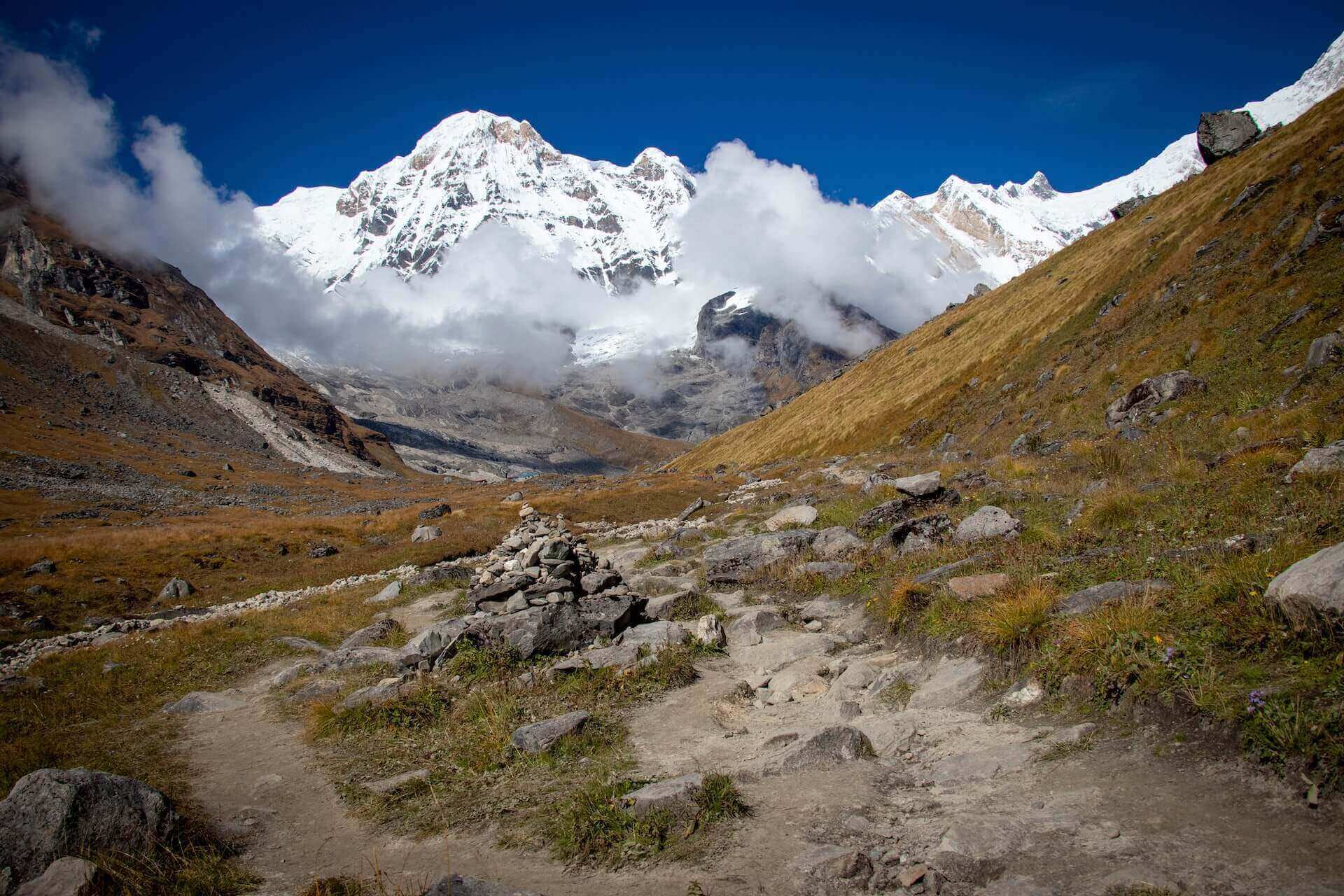
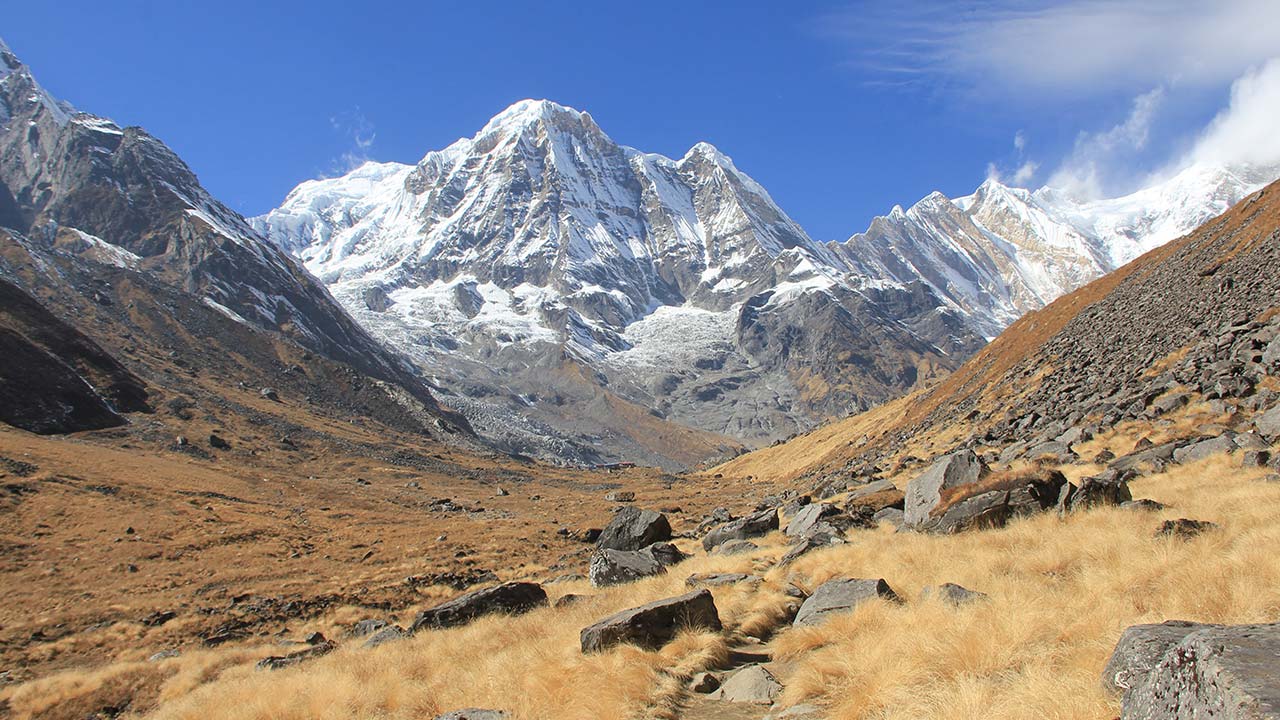
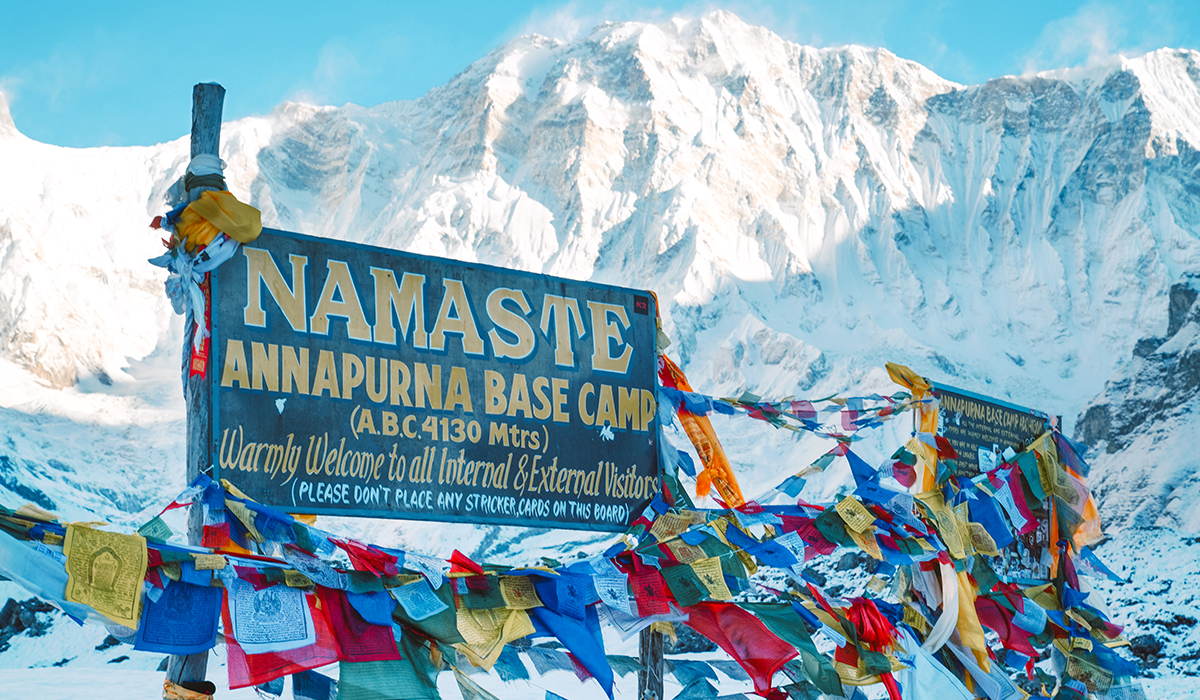
Standing at Annapurna Base Camp (4,130m/ 13,549ft), surrounded by a 360-degree panorama of Himalayan giants, including Annapurna I, Machapuchare, Annapurna South, Hiunchuli, and Gangapurna
Experience the dramatic landscape transition from lowland rice terraces and subtropical forests to high alpine terrain and glacial moraine
Trekking through the scenic Modi Khola valley, crossing long suspension bridges and walking beside soaring rivers, waterfalls, and steep rock walls
Passing through traditional Gurung, Magar, and Thakali villages, where stone houses, terraced fields, and mountain views blend culture with scenery
Explore Machapuchare Base Camp (3,700m/ 12,139ft) before reaching ABC, where the sacred and unclimbed Machapuchare dominates the skyline at close range
Relax your muscles in the natural hot springs at Jhinu Danda after descending from base camp, a rare and satisfying reward at the end of the trek
Trekking inside the Annapurna Conservation Area, Nepal’s largest conservation region, known for its rich biodiversity of flora and fauna
Enjoy relatively comfortable teahouse accommodations compared to remote camping treks, making the journey accessible while still delivering a true high-altitude Himalayan experience
Experience a well-paced altitude gain profile that makes the trek achievable for fit beginners while still rewarding seasoned trekkers with dramatic alpine scenery
Witness an unforgettable sunrise view as the first light turns the Annapurna massif golden, and the surrounding icy slopes glow above you
Trip Overview
The Annapurna Base Camp Trek is one of Nepal’s most complete Himalayan journeys. This exhilarating trekking route steadily unfolds from the terraced farmland and river valleys and takes you deep into the heart of the Annapurna Sanctuary. Unlike the longer and more remote adventures, the Annapurna Base Camp Trek route delivers dramatic mountain immersion within a relatively compact timeframe. Of course, without compromising on depth, scenery, and cultural richness. The trail rises through traditional stone villages, dense rhododendron forest, and deep gorges carved by the Modi Khola before entering the natural amphitheater of the sanctuary.
As you gain altitude, the landscape shifts noticeably; the humid lowlands give way to crisp alpine terrain where the mountains dominate the horizon. By the time you stand at Annapurna Base Camp, you will be completely enclosed by towering sentinels like Annapurna I, Machhapuchhre, Annapurna South, Hiunchuli, and Gangapurna. This 360-degree Himalayan panorama feels both powerful and intimate. What makes the Annapurna Base Camp Trek Nepal especially compelling is its balance. The altitude is high enough to feel like a serious mountain journey, yet it is manageable with proper pacing.
The teahouse infrastructure on this route is well-developed; however, the sanctuary itself still feels raw and dramatic. Likewise, the cultural encounter in Gurung and Magar Villages adds warth to the physical challenge, while the steady elevation gain profile allows trekkers to acclimatize naturally. For trekkers who are looking for a Himalayan base camp experience that feels authentic, visually dramatic, and realistically achievable without technical challenge, Annapurna Base Camp Trek is one of most well-rounded and rewarding route in Nepal.
The following table is an outline plan for Annapurna Base Camp Trek itinerary. We have included day-to-day travel plans, altitude profiles, elevation loss/gain, distance, and duration to help you understand what each day’s adventure shapes like. This structured table will help you visualize the gradual ascent through villages, forests, and alpine terrain all the way to Annapurna Base Camp. Also, it will give you a realistic sense of the physical demands and pacing of the journey.
Day
Annapurna Base Camp Trek Itinerary
Elevation Profile
Duration/ Distance
01
Arrival in Kathmandu (1,400m/ 4,593ft) via various international airlines and transfer to the hotel
02
Scenic drive from Kathmandu to Pokhara (822m/ 2,696ft)
578m/ 1,896ft (loss)
Drive Distance: 200km/ 124 miles
Drive Duration: 6 to 8 hours
03
Drive from Pokhara to Syauli Bazaar (1,170m/ 3,838ft) and trek to Ghandruk Village (2,012m/ 6,601ft)
1,190m/ 3,904ft (gain)
Drive Distance: 50km/ 31 miles
Drive Duration: 2 to 3 hours
Trek Distance: 8km/ 4.9 miles
Trek Duration: 2 to 3 hours
04
Trek from Ghandruk to Chhomrong (2,170m/ 7,119ft)
158m/ 518ft (gain)
Trek Distance: 10km/ 6.2 miles
Trek Duration: 5 to 6 hours
05
Trekking to Dovan (2,600m/ 8,530ft)
430m/ 1,410ft (gain)
Trek Distance: 8.6km/ 5.3 miles
Trek Duration: 6 to 7 hours
06
Dovan to Machhapuchhre Base Camp (3,700m/ 12,139ft)
1,100m/ 3,608ft (gain)
Trek Distance: 14km/ 8.6 miles
Trek Duration: 6 to 7 hours
07
Hike to Annapurna Base Camp (4,130m/ 13,549ft)
430m/ 1,410ft (gain)
Trek Distance: 2.9km/ 1.8 miles
Trek Duration: 2 to 3 hours
08
Trek from ABC to Bamboo (2,310m/ 7,578ft)
1,820m/ 5,971ft (loss)
Trek Distance: 16.7km/ 10 miles
Trek Duration: 6 to 7 hours
09
Bamboo to Jhinu Danda (1,780m/ 5,839ft)
530m/ 1,738ft (loss)
Trek Distance:12km/ 7.4 miles
Trek Duration: 5 to 6 hours
10
Jhinu Danda to Pokhara (822m/ 2,696ft) drive
958ft/ 3,143ft (loss)
Trek Distance: 4.4km/ 2.7 miles
Trek Duration: 2 to 3 hours
Drive Distance: 47.5km/ 29.5 miles
Drive Duration: 2 to 3 hours
11
Driving back to Kathmandu (1,400m/ 4,593ft)
578m/ 1,896ft (gain)
Drive Distance: 200km/ 124 miles
Drive Duration: 6 to 8 hours
12
International departure
Cost Details
What's Included in Annapurna Base Camp Trek 2026- Itinerary, Cost & Trek Guide
Airport pickup and drop by private vehicle.
Pokhara to Nayapul and Nayapul to Pokhara private vehicles.
Two night’s tourist standard twin sharing Hotel in Kathmandu with breakfast.
Two night tourist standard hotel in Pokhara (1 night before trek and 1 night after trek).
Three meals a day (Breakfast,Lunch and Dinner)during the trek.
Trekking lodge (Tea House) accommodations throughout the trek.
All necessary paper works Annapurna Conservation Area Project. Entry permit and Trekker’s Information Management System (TIMS) permit.
Kathamandu- Pokhara by tourist bus.
Pokhara – Kathmandu by tourist bus.
A Government License holder and English speaking, friendly guide with all his salary, food, drinks, accommodation, transport and insurance.
Comprehensive medical supplies (first aid kit will be available)
Arrangement of Emergency Helicopter service (paid by your Travel Insurance Company).
Use of sleeping bag, down Jacket and Duffel bag. (if you don’t have your own, need to return after trip completed).
Eco Holidays Nepal T-shirt and cap.
Government taxes and official expenses.
Annapurna base camp trek route map.
Oximeter to check your pulse and oxygen saturation and heart rate twice daily. (Very useful to check Altitude Mountain Sickness(AMS) symptoms.) Which will ensure you trek is in the safest hands possible for all levels of trekker.
Assistant guide group size above 8 + person.
Farewell dinner.
What's Excluded in Annapurna Base Camp Trek 2026- Itinerary, Cost & Trek Guide
Meals whilst you are in Kathmandu and Pokhara (Lunch and Dinner).
Your Travel and Medical Insurance.
Porter if needed($180)
Your Personal Expenses.
All the alcoholic and non-alcoholic cold and hot drinks on trek.
All desserts sweet things like chocolate, cake, pie, pudding.
Hot shower and battery charging on the tea houses.
Tips for the guide, porter. (Tipping is expected).
Extra night hotel in Kathmandu and Pokhara.
Price & Availability
Group Discount Available
1 Person
US$ 860
2 - 5 Person
US$ 755
6 - 10 Person
US$ 685
Itinerary of Annapurna Base Camp Trek 2026- Itinerary, Cost & Trek Guide - 12 days
Day 01
Arrival in Kathmandu (1,400m/ 4,593ft) via various international airlines and transfer to the hotel
After landing at Tribhuvan International Airport (TIA) and clearing the immigration process, you will be received by a representative of Eco Holidays Nepal at the terminal. Then, a swift transfer across the busy streets of Kathmandu, which carries centuries of history beneath the surface, will take you to your hotel in Thamel. Take your time to get fresh and rest to recover from the jetlag. If your arrival time allows, you can also take short walks around the hotel, exploring the restaurants, local eateries, and temples.
The evening is set for a trek briefing session at our office in Thamel and gear checks. Your guide will provide all the necessary information about the trek, including tips on safety and how you can maximize your experience. If you have any unfinished shopping, there are many gear shops in Thamel. You can end this day’s adventure with a warm traditional Nepali meal, settling in with the mild altitude.
About Kathmandu
Kathmandu is Nepal's political, cultural, and administrative center, situated in a historic valley that has long connected the country's Himalayan communities with the southern plains. For the Annapurna Base Camp Trek, its primary significance lies in the final preparations before entering the mountain region, including trekking permits, guide arrangements, equipment checks, and domestic travel connections. The city's historic core reflects the Newar civilization through intricately carved temples, traditional courtyards, and centuries-old urban settlements. Kathmandu's cultural landscape is also shaped by its Hindu and Buddhist heritage, particularly around the historic religious centers of the valley. Its contrast between densely developed urban neighborhoods and the remote mountain environment of the Annapurna Sanctuary makes it a meaningful starting point for understanding Nepal beyond its trekking trails.
Max. Elevation:1400
Duration:30 min
Day 02
Scenic drive from Kathmandu to Pokhara (822m/ 2,696ft): 6 to 8 hours
After leaving Kathmandu in the morning, the driving road climbs briefly toward Thankot before descending into a completely different landscape. The capital valley gives way to wider river corridors, and you will soon begin tracing the powerful currents of the Trishuli River. You will pass the rolling hills, roadside tea stalls, terraced farmland, and even rafting boats during the peak travel seasons. Then you will arrive at Mugling, a major junction town from where the road bends westward toward Pokhara.
As you head toward your destination, the scenery begins to shift again. The hills soften, and valleys open up wide. On a clear day, you will catch a glimpse of larger Himalayan peaks appearing in the distance. By the time you enter Pokhara, the atmosphere feels noticeably calmer than Kathmandu. This beautiful tourist hub sits beside Phewa Lake, and under a cloudless sky, the Machhapuchhre and the Annapurna range rise dramatically in the background.
Pokhara is not just a stopover in your Annapurna Base Camp Trek; it is the true gateway to the Annapurna region. From here onward, the mountains are no longer distant silhouettes; they are part of your journey as you move closer from tomorrow onwards.
About Pokhara
Pokhara is the geographical and tourism gateway to the southern Annapurna foothills, positioned along the Seti River basin beneath the massive Himalayan wall formed by Annapurna South and Machhapuchhre. Unlike Kathmandu's historic urban character, Pokhara is closely associated with lakeside landscapes, mountain tourism, and outdoor adventure. Phewa Lake is its defining natural feature, while the Seti Gorge reveals the dramatic river erosion that has shaped the surrounding valley. The city also has a strong connection with Gurung and Magar communities from the surrounding hills, many of whom have longstanding links to the region's trekking and mountaineering traditions. For the Annapurna Base Camp Trek, Pokhara is particularly significant as the principal access center for the Modi Khola corridor and the southern trail network. Its lower elevation, lakeside setting, and direct connection to the Annapurna foothills provide a distinct transition between Nepal's urban environment and the high mountain sanctuary.
Max. Elevation:822
Duration:30 min
Distance:200 km
Day 03
Drive from Pokhara to Syauli Bazaar (1,170m/ 3,838ft) and trek to Ghandruk Village (2,012m/ 6,601ft): 2 to 3 hours (drive) and 2 to 3 hours (trek)
In the morning, you will leave Pokhara and follows the Modi Khola Valley through Nayapul and Birethanti. Both of these are well-known checkpoint settlements at the confluence of the Modi and Bhurungdi Rivers. Birethanti has historically been the classic entry point into the Annapurna Conservation Area. Even though vehicles now continue further, it still remains an important gateway village on this Annapurna Base Camp Trek route.
From Birethanti, the road continues north toward Syauli Bazaar, your trek starting point. You will take a short breather here to stretch your legs and sort out your baggage. Then, you will begin the trekking part of your Annapurna Base Camp Trek itinerary. The trekking trail initially follows the riverbank before crossing a suspension bridge. As you start gaining elevation, the path takes you through Chhomrong's side farmlands and scattered homesteads. Then, your path gradually climbs toward Kimche, a small roadside settlement.
From Kimche, the final stone staircase ascent leads you to Ghandruk Village. By the time you enter Ghandruk, the scale of the settlement becomes clear. This is not a teahouse cluster, but it is a large, structured Gurung village with stone-paved lanes. You will witness the traditional slate-roof houses, a Gurung museum, and commanding views of Annapurna South and Machhapuchhre from vantage points.
About Ghandruk Village
Ghandruk is one of the most prominent traditional Gurung villages in the Annapurna region, known for its stone-built houses, slate-roofed architecture, and impressive views of Annapurna South, Hiunchuli, and Machhapuchhre. Located on a hillside above the Modi Khola Valley, the village has a strong cultural identity shaped by Gurung traditions, local customs, and its historic connection with the Gurkha community. The Gurung Cultural Museum provides insight into traditional clothing, household objects, and the community's heritage. Ghandruk also features terraced farmland, narrow stone-paved lanes, traditional homes, and a range of teahouses and lodges serving trekkers. Its elevated position and cultural character make it one of the most distinctive settlements in the Annapurna foothills, offering a valuable introduction to the region's mountain communities and rural lifestyle.
Max. Elevation:2012
Duration:2-3 hrs
Distance:50 km
Day 04
Trek from Ghandruk to Chhomrong (2,170m/ 7,119ft): 5 to 6 hours
Your morning in Ghandruk begins with clear mountain air and uninterrupted views of Annapurna South and Machhapuchhre on clear days. After a warm breakfast, you will leave Ghandruk behind and follow the path that descends steadily through stone steps and forested sections toward the Kimrong Khola. In this beautiful stretch of the Annapurna Base Camp Trek route, the terraced fields slowly give way to thicker rhododendron and oak forest as the valley narrows. After crossing the suspension bridge over the Kimrong Khola, you will climb toward Kimrong Village.
From Kimrong, the trail continues upward through mixed forest and stone staircases toward Taulung Village, a small settlement perched on a ridge. The trail here feels more exposed as the surrounding hills begin to open wider as you gain height. Eventually, the village of Chhomrong appears across the hillside, layered with blue-roofed lodges and terraced fields. This is one of the most strategically positioned villages on the Annapurna Base Camp Trek route. It sits directly at the gateway of the Modi Khola valley, marking your transition from mid-hill settlements into the narrower corridor leading toward the Annapurna Sanctuary.
From here onwards, the terrain ahead becomes more enclosed, the forests are denser, and the mountains feel closer. Although Day 04 of your Annapurna Base Camp Trek itinerary is not the highest point of the trek, it is the day when the Annapurna trek route starts to feel serious.
About Chhomrong
Chhomrong is a major Gurung settlement on the southern approach to the Annapurna Sanctuary, positioned on a steep hillside overlooking the Modi Khola Valley. At approximately 2,170 meters, the village offers impressive views of Annapurna South, Hiunchuli, and Machhapuchhre, with traditional stone houses and terraced fields defining its landscape. Chhomrong is one of the most important trekking centers on the Annapurna Base Camp route, featuring numerous teahouses, lodges, restaurants, and essential facilities. Its location also marks a geographical transition toward the narrower Modi Khola gorge and the higher forested terrain leading to Sinuwa, Bamboo, and Deurali. The village is particularly recognized for its steep stone staircases, which connect different levels of the settlement and form part of the characteristic trail network of the Annapurna Sanctuary.
Max. Elevation:2170
Duration:5-6 hrs
Distance:9.8 km
Day 05
Trekking to Dovan (2,600m/ 8,530ft): 6 to 7 hours
After enjoying your breakfast accompanied by breathtaking vistas, you will begin your descent on the long stone staircase that drops from Chhorming Village to Chhomrong Khola.
After crossing the suspension bridge over the river, you will climb toward Sinuwa Village. During this stretch, you will need to walk on a steady uphill through stone steps and forest. From Sinuwa, the trail enters dense bamboo and rhododendron forest. The landscape starts to narrow down as you walk deeper into the Modi Khola valley.
After passing the Lower Sinuwa Village, you will continue walking toward Bamboo Village, a small and shaded rest stop named after the thick bamboo forest that surrounds it. During the final segment, you will follow the trail that undulates gradually heading toward Himalaya, a compact teahouse cluster. From here, a slight descent will take you to Dovan Village, your rest stop on today’s trek. This beautiful village sits at a junction of forest and river and is surrounded by towering cliffs and thick vegetation. Your arrival here marks your proper entrance into the Annapurna Sanctuary corridor.
About Dovan
Dovan is a small trekking settlement located in the narrow Modi Khola Valley, surrounded by dense bamboo, rhododendron, and mixed temperate forests. Situated at approximately 2,600 meters, it occupies a sheltered section of the Annapurna Sanctuary route, where steep green slopes and the sound of the river create a distinct atmosphere compared with the exposed mountain terrain above. The settlement has several teahouses and basic accommodation facilities, serving as an established resting point between Bamboo and Deurali. Dovan is also notable for its changing vegetation and cooler forest environment, with moss-covered trees, cascading streams, and shaded trails defining much of the surrounding landscape. Its position within the Modi Khola gorge makes it an important geographical transition toward the higher alpine zone, where the forest gradually thins and the landscape opens toward Machhapuchhre Base Camp and Annapurna Base Camp.
Max. Elevation:2600
Duration:6-7 hr
Distance:8.6 km
Day 06
Dovan to Machhapuchhre Base Camp (3,700m/ 12,139ft): 6 to 7 hours
Leaving Dovan, you will follow the trail that continues north along the Modi Khola, gradually gaining altitude through forested terrain. The vegetation begins thin out as you pass back through the Himalaya and ascend toward Hinku Cave. From here, the environment begins to change visibly. The trees become sparse and are replaced by alpine shrubs and exposed slopes. Then, the valley widens slightly as you head toward Deurali Village, which is a critical acclimatization point and lunch stop.
From Deurali, the trail enters a more alpine stretch. The landscape becomes stark as the glacial debris, rockfall zones, and open slopes dominate the terrain. This is the high alpine corridor of the Annapurna Base Camp Trek route. As you continue walking further to the basin of Annapurna Sanctuary, the valleys start to open up gradually with the views of towering peaks in full scale. You finally reach Machhapuchhre BaseCamp at 3,700 meters.
Despite its name, this is not a true climbing base camp, as Machhapuchhre is a sacred and unclimbed mountain in Nepal. Instead, it serves as a transitional high camp before Annapurna Base Camp. From here, Machhapuchhre towers directly above you, and the surrounding amphitheater of north-central peaks like Annapurna South, Annapurna I, Gangapurna, and Hiunchuli feels surreal.
About Machhapuchhre Base Camp
Machhapuchhre Base Camp, commonly known as MBC, is a high-altitude settlement situated beneath the striking north face of Machhapuchhre, also known as Fishtail Mountain. Located at approximately 3,700 meters, it occupies a dramatic alpine setting surrounded by the towering peaks of the Annapurna Sanctuary, including Annapurna South, Hiunchuli, and Annapurna I. Despite its name, MBC is not an established climbing base camp for Machhapuchhre, as the mountain is considered sacred and climbing has been prohibited. Instead, it serves as an important trekking accommodation point with basic teahouses and panoramic mountain views. The surrounding landscape features rocky slopes, glacial streams, alpine vegetation, and increasingly exposed terrain. MBC is also a significant altitude milestone on the Annapurna Base Camp Trek, positioned just below the final ascent to the sanctuary's main destination.
Max. Elevation:3700
Duration:6-7 hr
Distance:11.2 km
Day 07
Hike to Annapurna Base Camp (4,130m/ 13,549ft): 2 to 3 hours
Finally, on this day 07 of your Annapurna Base Camp Trek itinerary, you will push toward your main goal. Although this is the shortest trekking day in distance, it is one of the most visually powerful. Leaving Machhapuchhre Base Camp, the trail climbs gradually across an open glacial basin. There is no forest, no river noise in this part, only snow peaks rising in every direction. Today, the sanctuary fully reveals its hypnotizing beauty. The peaks like Annapurna South, Hiunchuli, Gangapurna, and Annapurna I surround the basin in a near-complete ring of Himalayan giants.
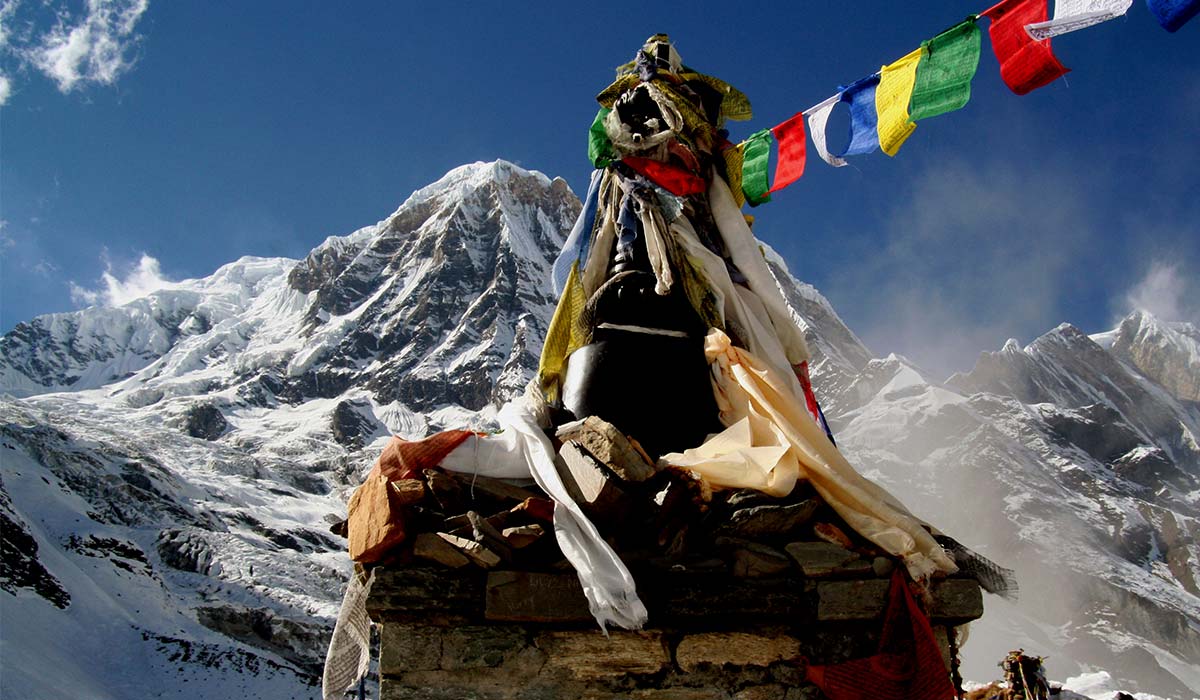
After 2 to 3 hours of steady ascent, you will arrive at Annapurna Base Camp. Unlike Everest Base Camp, Annapurna Base Camp sits directly beneath the summit of Annapurna I. The glacier flows just beyond the settlement, and prayer flags mark the highest point of your Nepal Annapurna Base Camp Trekking. Spending the afternoon here allows you to absorb the scale of the Annapurna massif, especially as light shifts across the snow walls as the sun dips down the horizon.
About Annapurna Base Camp
Annapurna Base Camp is the principal destination of the Annapurna Sanctuary Trek, situated at 4,130 meters within a natural glacial basin surrounded by some of the highest peaks in the Himalayas. The sanctuary provides a remarkable 360-degree mountain panorama featuring Annapurna I, Annapurna South, Hiunchuli, Gangapurna, and Machhapuchhre. The base camp is particularly notable for its close proximity to Annapurna I, the world's tenth-highest mountain and the first eight-thousander to be successfully climbed. Its landscape consists of glacial moraines, rocky terrain, snow-covered slopes, and a dramatic amphitheater of Himalayan summits. Basic seasonal lodges accommodate trekkers, while the exposed high-altitude environment brings cold temperatures and rapidly changing weather. The combination of mountain scale, glacial scenery, and the enclosed sanctuary setting makes ABC one of Nepal's most recognizable trekking destinations.
Max. Elevation:4130
Duration:2-3 hrs
Distance:3 km
Day 08
Trek from ABC to Bamboo (2,310m/ 7,578ft): 6 to 7 hours
Your adventure on this day begins with admiring the stunning sunrise view over the Anapurna massif. Then, you will descend from the base camp, retracing your steps on the open alpine basin back to Machhapuchhre Base Camp. Enjoying the last close-up views of the Annapurna sanctuary, you will proceed further with your descending journey. From MBC, your descent becomes steady and continuous. You will pass Deurali Village and then head toward the Himalaya.
This descending bit of the Annapurna Base Camp Trek route feels faster, but the strain shifts to the knees rather than the lungs. So, you need to be careful with your footing and maintain balance. As your trek route drops below 3,000 meters, you will re-enter the forested trail, and the oxygen feels richer. You will finally arrive at Bamboo, a shaded settlement that is surrounded by thick bamboo forests. After the stark white terrain of the higher part of Annapurna Sanctuary, this stop feels lush and sheltered.
About Bamboo
Bamboo is a small forest settlement in the Modi Khola Valley, named after the bamboo vegetation found throughout the surrounding lower Annapurna landscape. Situated at approximately 2,310 meters, it lies within a narrow, heavily forested section of the Annapurna Sanctuary trail, where dense bamboo groves, rhododendron, oak, and other subtropical vegetation create a distinct contrast to the alpine terrain above. The area is known for its cool, shaded environment, flowing streams, and occasional wildlife sightings, including Himalayan bird species and langur monkeys. Bamboo has several basic teahouses and lodges serving trekkers, making it an established overnight stop along the route between Sinuwa and Dovan. Its position within the forest corridor also highlights the rapid ecological transition of the Annapurna region, where vegetation and climate change considerably across relatively short elevation differences.
Max. Elevation:2310
Duration:6-7 hrs
Distance:16.7
Day 09
Bamboo to Jhinu Danda (1,780m/ 5,839ft): 5 to 6 hours
After a warm, delicious breakfast, you will hit the trail in the morning. You will traverse the familiar forested route toward Sinuwa Village. From here, a long descent will take you toward Chhomrong Khola. The stone step drops steadily across the forest until you reach the suspension bridge at the bottom of the valley. Then, you will begin your ascent back up to Chhomrong Village. This top has a different vibe on this cycle of your journey. It feels less like a gateway and more like a farewell point from the inner sanctuary.
From here, you will make your descent toward the Jhinu Danda village on a long and stone-paced route. The vegetation around the route becomes thicker and more subtropical as you lose altitude. Jhinud Danda is not just another stopping point on the Annapurna Base Camp trek itinerary; it is also a popular destination with natural hot springs. After several days of continuous trekking, soaking in the warm spring water with healing properties is a physically rewarding experience.
Your arrival at Jhinu Danda marks that you are now fully out of high-altitude terrain and back in the valleys with warmer air and greener surroundings.
About Jhinu Danda
Jhinu Danda is a popular village in the lower Annapurna region, best known for its natural hot springs beside the Modi Khola River. Situated at approximately 1,780 meters, the settlement occupies a hillside surrounded by terraced farmland, forested slopes, and traditional Gurung communities. The hot springs are located below the main village, where natural geothermal water fills bathing pools that provide a relaxing attraction for trekkers. Jhinu Danda is also an important connection point within the Annapurna trail network, linking Chhomrong and the upper Modi Khola Valley with lower settlements and road access toward Pokhara. Local lodges, teahouses, and small eateries support visitors, while the surrounding landscape offers a noticeable return to warmer temperatures and greener vegetation after the high-altitude environment of Annapurna Base Camp. Its combination of natural hot springs, village character, and geographical position makes it a distinctive destination in the lower Annapurna region.
Max. Elevation:1780
Duration:5-6 hrs
Distance:11.7 km
Day 10
Jhinu Danda to Sibai (1,530m/ 5,019ft) trek and drive to Pokhara (822m/ 2,696ft) drive: 2 to 3 hours (trek) and 2 to 3 hours (drive)
This is the final trekking day of the Annapurna Base Camp Trek itinerary. In the morning, you will follow the trails beside the Modi Khola downstream. Your walking path undulates gently as you walk across farmlands, terraced hills, and scattered rural homes. Compared to previous days of high-altitude trekking, this day’s adventure feels relaxed and open. Along the way, you will pass small traditional settlements and cross suspension bridges before reaching Sibai Village.
There is a road access point in this village, and your arrival here marks the official end of the trekking part. From Sibai, the vehicle transfer will bring you back to Pokhara. The driving trail retraces the Modi Khola Valley before reconnecting with the broad Pokhara basin. Arriving in Pokhara on this day feels different from when you first entered this tourist hub on Day 02. The hot showers, lakeside cafes, and comfortable beds now carry an earned satisfaction after the long mountain journey.
You can take a stroll around the peaceful lakeside to catch the sunset view with the reflection of Annapurna and Machhapuchhre on the water's surface. The streets of Pokhara are also lively during the evening, and you can explore restaurants that serve a diverse range of cuisine.
Max. Elevation:822
Duration:2 hrs
Distance:27.6 km
Day 11
Driving back to Kathmandu (1,400m/ 4,593ft): 6 to 8 hours
Bidding farewell to the city of lakes, you will begin your return drive in the morning. Your trail retraces the rapids of the Trishuli River on the same Prithvi Highway corridor. The landscape once again unfolds in layers of river valleys, terraced hillside, roadside towns, and highway junctions. Re-entering Kathmandu, the traffic and density feel sharper after days in remote and quiet Himalayan terrain. Yes, the Nepal Annapurna Base Camp Trekking is complete, but the transition back into the urban rhythm takes a moment.
After entering Kathmandu, we will transfer you to your hotel. The evening is free for souvenir shopping, exploring the busy and vibrant streets of Thamel, enjoying a traditional farewell dinner, or simply resting and soaking in the transition from the godly realms beneath the towering snow-clad sentinels to comfortable modern life.
Max. Elevation:1400
Duration:6-7 hrs
Distance:200
Day 12
International departure
This is the final day of your Annapurna Base Camp Trek itinerary as you prepare to leave this Himalayan nation with a homebound flight. Depending on the flight schedules, you can give a quick visit to nearby popular landmarks. But it is important that you enter the airport 2 to 3 hours prior to your flight schedule for the airport processes. Make your preparations based on that timing.
Although your Annapurna Base Camp Trek via Ghandruk has ended, the memory of walking through bamboo forests, glacial valleys, and the high alpine sanctuary will remain with you long after leaving Nepal. We hope to see you again for your next Himalayan calling. Have a safe trip.
Max. Elevation:1400
Duration:30 min
If the provided schedule isn't suitable for you, we can create personalized travel arrangements.
The Annapurna Base Camp Trek difficulty is at a moderate level. It means the journey is suitable for beginners with decent fitness as well as experienced trekkers who are looking for a rewarding Himalayan adventure without technical difficulty. Unlike remote and technical climbs, the Annapurna Base Camp Trek route moves along the well-established trail through traditional villages, lush forests, and alpine landscapes. Your trekking route starts from Syauli Bazaar, and you will gradually ascend through terraced farmlands and dense rhododendron forests.
However, as you cross Chhomrong, the trail becomes more physically demanding with long stone staircases, steady uphill climbs, and occasional steep descents. Altitude is another key factor that influences the Annapurna Base Camp Trek difficulty level. The Annapurna Base Camp sits at an altitude of 4,130 meters (13,549 feet). Although the ascent is gradual compared to Everest Base Camp, the thin air conditions above 3,000 meters can make even simple climbs feel exhausting. You will notice a slower walking pace and heavier breathing as you approach Machhapuchhre Base Camp before pushing for Annapurna Base Camp.
The daily walking hours usually range from 5 to 7 hours, depending on the itinerary plan and pace. You will have to traverse across diverse terrain such as stone steps, suspension bridges, forest trail and high-altitude glacial moraine paths. While there are no technical sections along the way, the constant ascents and descents demand a good level of physical preparation. So, in summary, trekking to Annapurna Base Camp in Nepal is a physically demanding but non-technical route. With basic cardiovascular fitness, leg strength, and proper acclimatization, most trekkers can successfully complete this trek.
Best Time for Annapurna Base Camp Trek
It is very important to understand the Annapurna Base Camp Trek best season as it can completely shape your experience. The mountain visibility, trail conditions, scenery, and overall comfort depend on the season of your choice. While the Annapurna Base Camp Trek via Ghandruk is accessible for most of the year, two seasons stand out as the most reliable and rewarding periods: spring (March, April, and May) and autumn (September, October, and November).
Spring (March, April, and May)
The spring season is widely regarded as one of the best time for Annapurna Base Camp Trek. During this period, the forested part of the trail comes alive with blooming rhododendrons and other wildflowers. The hills are colorful, the skies are generally clear, and the temperatures are comfortable. You can expect the temperatures to be around 15°C to 25°C during the daytime, and at night, it can drop upto -8°C (higher elevations).
This season also provides longer daylight hours. So, you can enjoy your trek with safer pacing, especially on demanding sections with continuous climbs and significant elevation gain. If you are looking for a season that balances temperatures, trail safety and physical comfort, spring season is one of the strongest choices.
Autumn (September, October, and November)
The spring season offers balance, and autumn is known as a structurally reliable season. After the monsoon, the atmosphere clears, and the entire Annapurna region feels sharper nd closer. Besides the aesthetic, trekking in Nepal during the autumn season comes with the advantage of stability. Autumn sits in a high-pressure window with a low probability of rainfall. The trail dries out completely, landslide risk decreases, and the river crossings stabilize.
The temperatures of the Annapurna region remain around 10°C to 20°C during the day, and at night it can drop upto -12°C. However, by late November, the temperatures begin to drop sharply near Annapurna Base Camp while the daytime temperatures remain ideal. So, you have to prepare for that if you are planning your Annapurna Base Camp Trek Nepal during the latter part of the season. If your priority is the most statistically stable trekking window with minimal weather-related disruption, autumn is your season.
Off-Season Trekking
The Annapurna Base Camp Trek via Ghandruk is also possible during the off-seasons, such as monsoon (June, July, and August) and winter (December, January, and February). However, you will have to deal with extra obstacles if you choose these windows for your trek. The winter season does offer quieter and more peaceful trekking experiences. But the temperatures drop significantly above 3,000 meters, and snow accumulates near the base camp areas. At the Annapurna Base Camp, the daytime temperatures hover around 0°C to 5°C, and the nighttime temperature can dip to -10°C to -20°C.
While a winter trek is not impossible, it requires better preparation for cold conditions and possible weather-related delays. As for the monsoon, it is the least recommended season for trekking to Annapurna Base Camp in Nepal. Heavy rainfall makes the lower section slippery; there is an increased risk of landslides, and the forested trails are infested with leeches. Likewise, the mountain views are often blocked by clouds. On the positive side, there is less crowd, the landscapes become intensely green and vibrant, which some trekkers appreciate.
Packing List
Packing for Annapurna Base Camp Trek via Ghandruk is not about stuffing your bag with just-in-case items. You need to understand the mountain environment and layer intelligently for the trek that moves across humid river valleys to the glacial basin of the Annapurna sanctuary. This rapid altitude gain means that temperatures, wind exposure, and physical exertion change constantly. Your goal for packing for ABC Trek should be to stay warm and efficient without carrying unnecessary weight.
Clothes
Quick-dry trekking T-shirts
Thermal tops and bottoms
Lightweight fleece jacket
Insulated down or synthetic jacket
Optional lightweight softshell jacket
Waterproof, windproof shell jacket
Waterproof trekking pants
Trekking pants
Lightweight shorts
Comfortable sleepwear
Warm beanie
Buff or neck gaiter
Lightweight gloves
Insulated gloves
Sun hat or cap
Footwear
Well-broken-in trekking boots
Good grip outsole
Lightweight sandals or camp shoes
Optional lightweight trail shoes
Moisture-wicking trekking socks
Warm wool socks
Liner socks (optional for blister prevention)
Personal Hygiene and Essentials
Toothbrush and small toothpaste
Biodegradable soap
Quick-dry towel
Wet wipes and tissue paper
Hand sanitizer
Sunscreen SPF 50+
Lip balm with SPF
Basic first-aid kit
Personal medications (if any)
Small nail clipper
Toilet paper (not always provided)
Electrolyte tablets or powder
Reusable water bottles (2 liters total capacity minimum)
Trekking Gear and Equipment
Daypack (30 to 40L capacity)
Rain cover for backpack
Packing cubes (keep layers organized)
Sleeping bag (rated for at least -10°C or -15°C)
Trekking poles
Headlamp with extra batteries
Power bank
Universal adapter (Nepal uses Type C, D, M sockets)
UV-protection sunglasses
Thermos flask
Inflatable pillow or compressible travel pillow
Earplugs
Eye mask
Offline map downloaded
Multi-tool or small Swiss knife
Accommodation and Food During Trek
One of the quiet strengths of the Annapurna Base Camp trek is that you don’t need wilderness camping or expedition-style logistics. The trekking trail is lined with locally run teahouses that have evolved over decades of trekking history. However, the experience changes as you climb, just like the landscape does. In the lower villages, accommodation feels almost comfortable in a way that surprises many first-time trekkers. Stone houses with wooden balconies overlook terraced hillsides, rooms have proper beds with mattresses and blankets, and some lodges even offer attached bathrooms.
However, as you climb past Chhomrong, you will notice the shift. The trail narrows, the forest thickens, and the lodges become simpler. At the higher elevations, the rooms are smaller, walls are thinner, and bathrooms are shared. Hot showers, if available, are limited, and most often you will have to rely on a bucket of hot water. Regardless, the accommodation service is sufficient for a good rest after a long day’s adventure. Heating is confined to the communal dining hall, usually centered around a stove that burns for a few hours in the evening.
Food Option
Food along the Annapurna Base Camp trail gradually simplifies as you gain altitude, but it never becomes scarce in this mainstream route. The kitchen culture of the teahouses is built around reliability rather than variety. They ensure that you can find something warm and edible even in remote sections after exploring the Himalayan trail during the day. What matters most on this trek is not gourmet taste but nutritional consistency.
You are walking long hours, climbing stone stairways, and dealing with thinning air. The food is designed to help you replenish your energy rather than provide culinary complexity. Here are the menus that you can expect during your Nepal Annapurna Base Camp Trek.
Breakfast
Porridge
Tibetan bread with butter, honey, or jam
Toasted bread
Pancakes (plain, apple, banana, or chocolate)
Eggs (boiled, fried, scrambled, or omelette)
Hash browns or fried potatoes
Muesli
Chapati or local flatbread
Sandwich
Cornflakes or similar cereal options
Set breakfast combinations (toast, eggs, tea/coffee)
Lunch and Dinner
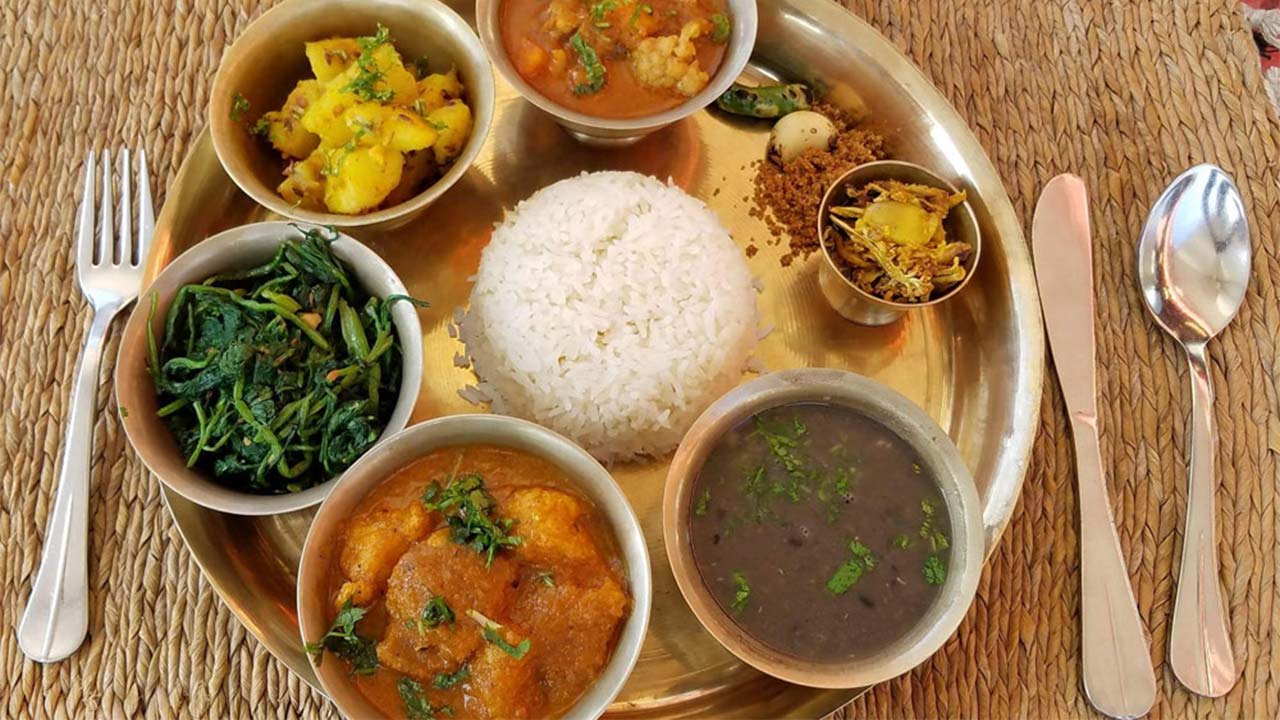
Dal Bhat (rice, lentils, seasonal vegetables, pickle)
Fried rice (vegetable, egg, or chicken)
Noodles
Thukpa (Tibetan noodle soup)
Spaghetti or macaroni
Momo
Soup (garlic, tomato, mushroom)
Mashed or fried potatoes
Sherpa stew
Spring rolls (lower elevations)
Pizza (basic but available in lower and mid villages)
Chow mein (stir-fried noodles)
Tibetan bread with curry
Beverage Options
Tea (black, milk, lemon, ginger)
Hot chocolate
Coffee (instant is common)
Boiled drinking water (sold by the liter)
Bottled mineral water
Soft drinks
Fresh fruit juice (seasonal)
Local alcohol
Training and Preparation
To enjoy a comfortable and memorable Annapurna Base Camp Trek, you should start your training 4 to 8 weeks before the start date. This trek does not require athletic-level performance, but it does demand endurance, strong leg muscles, and a capable cardiovascular system. You will walk continuously for multiple days with 5 to 7 hours of average walking. So, physical condition is a must if you plan to actually enjoy the experience and not make it about one point to another adventure. Strength exercises like squats, lunges, push-ups, planks, and weight training help to tone your muscles.
Cardiovascular and endurance exercises like brisk walking, running, swimming, cycling, dancing, jumping rope, and rowing help your body to become more efficient ultiizing oxygen. This way, you will be able to reduce the risk of altitude sickness and enjoy your trek without extreme exhaustion. If you're looking for a more practical approach, you can also do practise hike on nearby hills. By doing so, you will prepare your body for uphill walking, acclimatization practise and it can also be a wonderful opportunity to test out your trekking gear.
Mental Preparation
You need to remember that trekking to Annapurna Base Camp in Nepal is not only a physical journey but also a psychological one. The trail becomes progressively slower as you climb higher, and the challenge often comes from patience rather than strength. Many trekkers feel surprised when their body becomes tired even when the distance covered seems small. Understanding this beforehand helps you stay mentally balanced during the trek.
Your mental preparation for the trek is mainly about accepting the mountain’s pace and staying calm when walking feels harder above 3,000 meters. Here are some mental preparation tips to help you prepare for the journey:
Do not rush your walking speed at a higher altitude; maintain a steady rhythm, you are not doing a marathon
Expect fatigue and breathlessness as natural responses as you gain altitude
Take regular short rests instead of pushing continuously
Stay positive even during long uphill stretches
Focus on the experience rather than only reaching the destination
Be flexible with weather or schedule changes
Set smaller goals
Prioritize safe trekking over fast trekking
Necessary Permits
Trekking to Annapurna Base Camp via Ghandruk requires you to follow permit regulations, as the route enters a protected Himalayan conservation zone. There are several checkpoints along the trekking route where officials will check your permits. So, completing the documentation process before starting the trek is very crucial. For this exciting journey in the Annapurna Sanctuary, you will need to collect two major permits:
Annapurna Conservation Area Permit (ACAP)
Trekkers’ Information Management System (TIMS) Card
The ACAP permit is not just an entry pass; it supports biodiversity protection, waste management systems, sustainable tourism practices, and infrastructure improvements across mountain communities. As for the TIMS Card, it functions as a safety registration system that records trekkers’ movements within the region. In case of emergencies, natural disruptions, or rescue coordination, this system helps authorities track and assist trekkers more efficiently.
These permits can be obtained through the Nepal Tourism Board offices in Kathmandu or Pokhara. If you are doing the trek through a registered agency like Eco Holidays Nepal, they will handle all the permit requirements on your behalf to ensure a smooth journey. You will just have to provide documents like passport-sized photographs and a copy of your passport (with at least 6 months remaining validity).
Can Beginners Do Annapurna Base Camp Trek?
The Annapurna Base Camp Trek via Ghandruk is suitable for beginners. However, it is only ideal for prepared beginners, not casual walkers with no conditioning. This distinction matters if you are planning the trek as a beginner. In our 12 Days Annapurna Base Camp Trek itinerary that starts from Ghandruk, you will gain elevation more gradually compared to other fast-paced itineraries in the region. Your trekking trail builds progressively through terraced farmland, rhododendron forests, and river valleys before you push for the alpine amphitheater of Annapurna Base Camp.
This steady ascent gives first-time trekkers better acclimatization time, which significantly reduces the risk of altitude-related issues when the itinerary is properly planned. From a technical standpoint, the trek to Annapurna Base Camp requires no mountaineering skills. The path is well-defined, supported by established teahouse infrastructure, and frequently traveled during peak seasons. This makes navigation straightforward and logistical planning relatively simple.
The biggest challenge for first-timers is not the difficulty of terrain, but it is endurance and altitude adaptation. Trekkers with a moderate fitness base generally perform well on this route. If you are not prepared at all for the demanding aspects of the journey, then it might feel like a bigger challenge than it actually is. So, to summarize, Annapurna Base Camp Trek via Ghandruk is ideal for beginners who want a serious Himalayan experience without technical climbing. It is one of the most balanced entry-level high-altitude treks in Nepal.
Annapurna Base Camp Trek Cost
The Nepal Annapurna Base Camp Trek is regarded as a moderately priced Himalayan journey compared to other trekking routes of similar length. It offers strong value compared to more remote and flight-dependent routes like the Everest Base Camp trek. Since this itinerary is accessed by road from Kathmandu or Pokhara, transportation expenses remain relatively controlled, making the overall package more cost-efficient.
For a standard 10 to 12-day itinerary, the average cost of Annapurna Base Camp Trek typically ranges between USD 800 and USD 1,500 per person. Still, the overall cost depends on the level of service and customization. Several other variables influence the final cost, including group size, trekking season, hotel standards in the cities, guide and porter support, transportation type, and overall service quality.
Well-structured Annapurna Base Camp packages within this range generally include:
Required trekking permits
Licensed and experienced trekking guide
Porter assistance
Teahouse accommodation during the trek
Three daily meals while trekking
Hotel stays in Kathmandu and Pokhara
Ground transportation as per the itinerary
Government taxes and official service charges
However, the Annapurna Base Camp Trek cost can vary significantly between agencies. Lower-cost offers may exclude essential services such as porter support, proper insurance coverage for staff, or quality accommodation. For this reason, you need to carefully review the “cost includes” and “cost excludes” sections to avoid unexpected expenses during the journey.
Travel Visa
Before setting off for the Annapurna Base Camp Trek Nepal, you must arrange your legal entry into the country. For most nationals, obtaining a Nepal Tourist Visa is a simple and hassle-free process. The most convenient option is the Visa on Arrival, which is available to the majority of nationalities without lengthy pre-approval procedures. You can receive a Visa on Arrival at Tribhuvan International Airport in Kathmandu, as well as at other designated land border entry points.
The standard procedure for acquiring this visa includes:
Completing an online arrival form (either in advance through the official immigration website or at kiosks upon arrival)
Presenting a passport valid for at least six months from your date of entry
Submitting a recent passport-sized photograph
Paying the applicable visa fee in cash (USD is commonly accepted)
There are three types of visa that you can apply for based on your intended period of stay:
15 Days Visa— USD 30
30 Days Visa— USD 50
90 Days Visa— USD 125
Since the Annapurna Base Camp itinerary typically runs around 10 to 12 days, including arrival and departure logistics, a 15-day visa is generally sufficient. However, if you plan to explore additional destinations such as Pokhara, Chitwan, or cultural sites in Kathmandu before or after your trek, you can also opt for a 30-day plan for more flexibility. Furthermore, you can also get a visa extension, which also follows a smooth procedure. The minimum extension is 15 days, which costs USD 45.
Since the trek covers high-altitude terrain over multiple days, physical preparation matters. Build your fitness with regular cardio and walking workouts before you arrive, and maintain a steady, comfortable pace on the trail so breathing stays controlled at altitude. Understanding the route and environment in advance also makes the trek more enjoyable and less stressful.
Why is Acclimatization necessary?
Acclimatization is essential to avoid Acute Mountain Sickness (AMS). Since the body needs time to adjust from low to high altitude, our itinerary builds in scheduled rest days. Staying hydrated, avoiding caffeine and alcohol, and pacing yourself all help. Diamox (acetazolamide) can reduce AMS symptoms consult your guide or doctor before and during the trek if you feel you may need it.
What are the accommodation facilities on the trek?
Trekking routes throughout Nepal are supported by a wide network of teahouses and lodges that offer accommodation to trekkers. These establishments typically provide basic but comfortable rooms, usually with twin beds and shared bathroom facilities. In addition to lodging, many teahouses also offer meals and a communal dining area where trekkers can relax and socialize. Depending on the location and altitude, some teahouses may also provide extra amenities such as hot water showers, charging options, and limited internet access. Overall, they contribute to a convenient and culturally immersive trekking experience across the country.
What are the food facilities on the trek?
Food in the trek is the Nepalese diet of “Dal Bhaat.” You can have various other food items like noodles, chapati, thukpa, etc. Hot drinks like tea, garlic soup, coffee, etc., are popular in cold, high-altitude regions. Besides that, you can also carry your snacks to eat while trekking.
What are drinking water facilities on the trek?
You can get water facilities at the tea houses, or you can use water purification tablets on tap water. Bottled water is also valuable in the teahouses.
What are the payment methods in Nepal?
Common payment methods in Nepal are:
Cash-NPR
Credit and Debit Cards(visa, mastercard, American express)
Yes, Eco Holidays Nepal provides clients with porters as part of a trekking package, porters will carry your main luggage, allowing you to enjoy your trek with just a light daypack. Also, Eco Holidays Nepal will provide you with a professional and licensed trekking guide, Your guide will lead the way to ensure your safety and will share local insights and make your journey meaningful with stories and cultural knowledge.
Please note that porter service may or may not be included in your selected package. If porter service is included, the cost will be covered in the package price. If the package does not include porter service, clients can request it separately, and the cost will need to be paid by the clients themselves. We’ll be happy to assist with porter arrangements based on your needs.
Annapurna Trekking faqs
Where is the Annapurna Base Camp located?
Annapurna Base Camp remains located 50 km away from Pokhara in Western Nepal.
When is the best time for the trek?
The best time for the trek is ideally in the Spring and Autumn.
FAQs
Is Annapurna Base Camp Safe?
Yes, the ABC trek is generally safe for prepared trekkers. The trails are well-established, teahouses are reliable, and local authorities monitor the region. However, as with any high-altitude trek, caution is needed regarding weather, proper acclimatization, and physical fitness.
Can I Do Annapurna Base Camp Trek Without Guide?
Hiring a licensed guide is mandatory for the Annapurna Base Camp Trek. Guides ensure your safety, handle permits, provide local insights, and manage emergencies along the trail. Even experienced trekkers need to travel with a guide to comply with local regulations and conservation rules.
How Long is Annapurna Base Camp Trek?
The trek typically takes 10 to 12 days round-trip, depending on the starting point and pace. This duration includes travel from Pokhara or Kathmandu, acclimatization days, and the return journey after reaching the base camp.
How Much Does Annapurna Base Camp Trek Cost?
The Annapurna Base Camp Trek cost for a standard trek package usually ranges from USD 800 to USD 1,500 per person. At this price range, the package covers permits, guide and porter support, teahouse accommodation, meals during trekking, and ground transportation. The overallcosts varies based on season, service level, and group size.
Where Does Annapurna Base Camp Trek Start?
Most trekkers begin the journey from Phedi or Nayapul, a short drive from Pokhara. In this itinerary plan, you will begin your trek from Syauli Bazaar. From there, the trail passes through scenic villages like Ghandruk and beautiful forested valleys.
Is Annapurna Base Camp Trek Worth It?
Absolutely, this north-central Himalayan adventure offers breathtaking Himalayan scenery, panoramic views of peaks like Machapuchare and Annapurna South, cultural immersion in Gurung, Magar, and Thakali villages, and the unique experience of standing at the base of 10th highest peak in the world.
Why Annapurna Base Camp is Famous?
Annapurna Base Camp Trek Nepal is famous for its spectacular mountain amphitheater, accessible trekking experience, and panoramic Himalayan views. This journey combines natural beauty, cultural richness, and the thrill of high-altitude trekking without any technical difficulty.
What is the Maximum Altitude of the Trek?
The highest point of this trekking route is Annapurna Base Camp, which is at an elevation of 4,130 meters (13,549 feet). Thus, even though it is not as significant as other high-altitude routes, acclimatization is essential to minimize altitude-related risks.
Is Altitude Sickness a Concern on This Route?
Yes, hwoever the risk of AMS is moderate compared to more extreme treks. If you follow the gradual ascent and acclimatize properly, it will significantly reduce the risk of altitude sickness. You also need to stay hydrated, take short breaks, eat nutritious meals, and be aware of the early symptoms to keep AMS at bay.
Is Travel Insurance Required for Annapurna Base Camp Trek?
Yes, travel insurance is mandatory for the Annapurna Base Camp Trek. It protects you in case of high-altitude emergencies, including medical issues and helicopter evacuations from high elevations.
Standing inside the 360-degree mountain sanctuary!
Walking into the Annapurna Sanctuary honestly felt like stepping into a natural cathedral surrounded by massive Himalayan peaks. The trail from Machhapuchhre Base Camp to Annapurna Base Camp was absolutely stunning, and every turn seemed to bring a better view. It was tough in places, but waking up surrounded by those mountains made every step worth it. Eco Holidays Nepal made the whole experience easy and stress-free by taking care of our tea house bookings, meals, and arrangements along the way. We could simply focus on enjoying the trail, taking photos, and soaking in the incredible scenery. Such a memorable trek, and definitely an experience I’d love to do again!