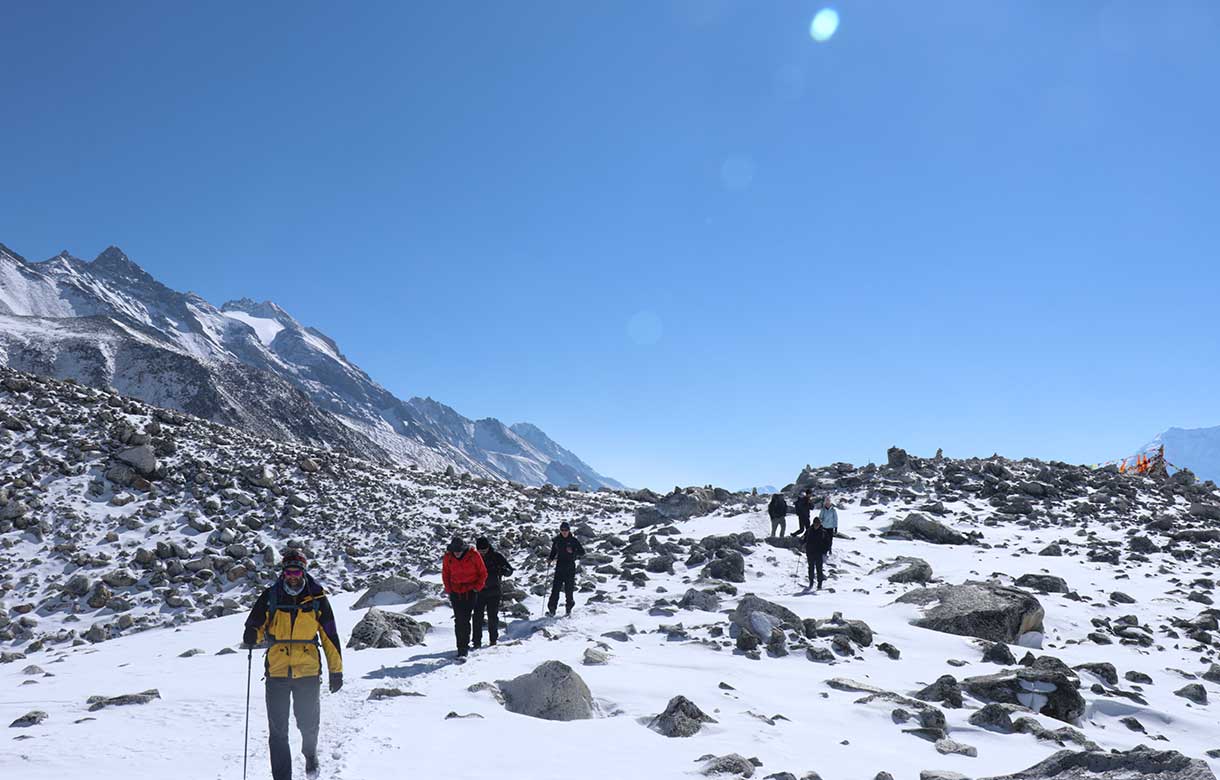
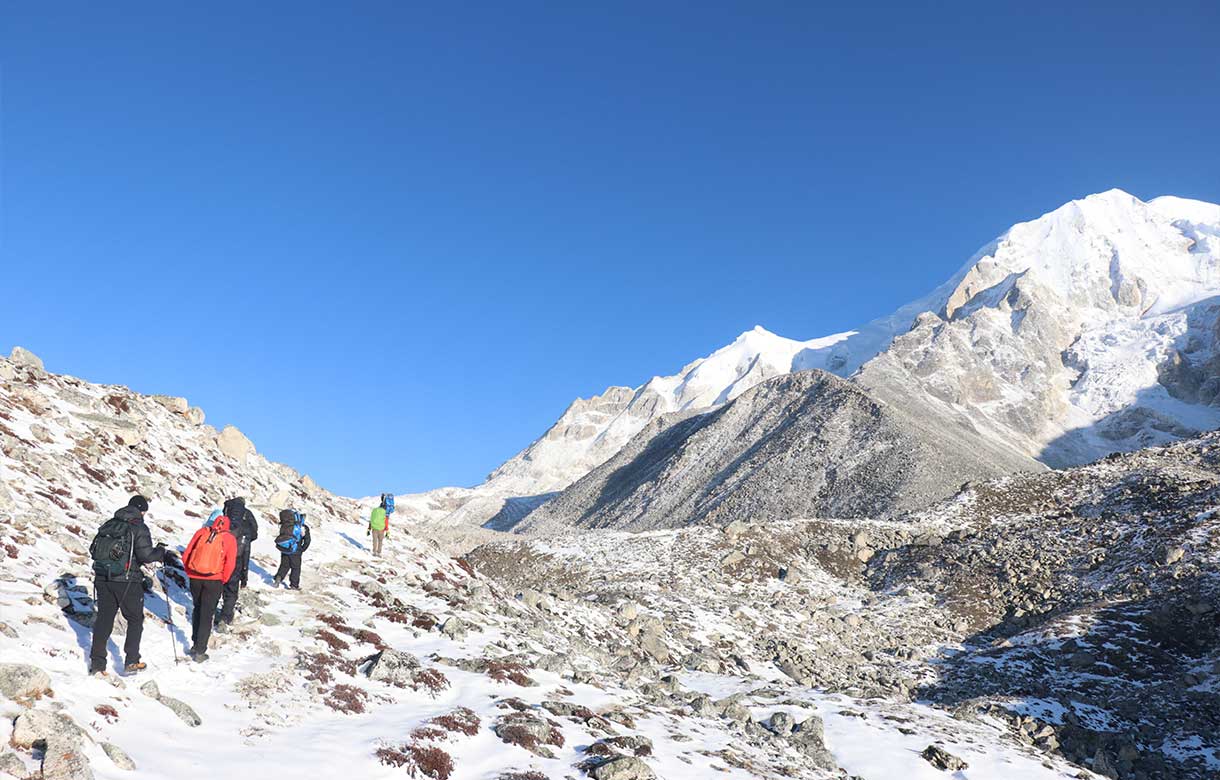
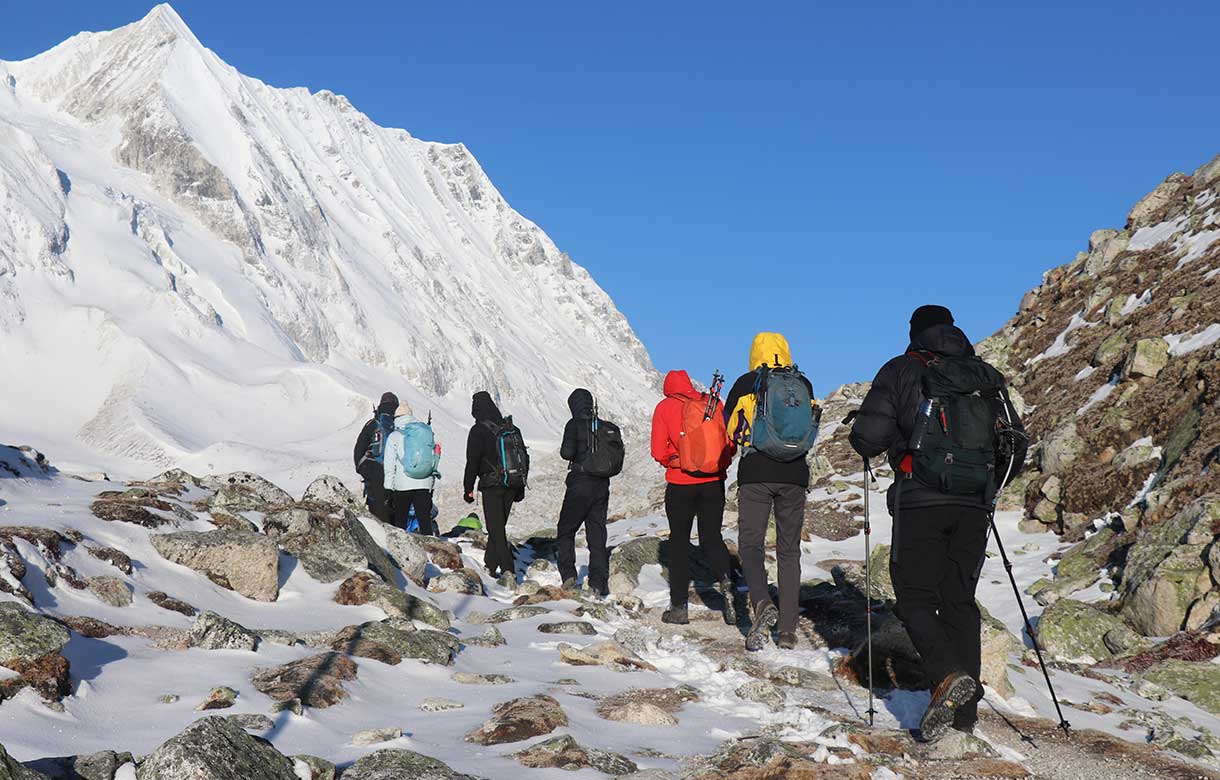
Trekking through one of the most remote and restricted regions in Nepal where regulated access has helped to preserve the raw landscapes and authentic mountain culture
Completing the legendary Manaslu Circuit Trek in just 10 days in a properly optimized package without missing out on the experience
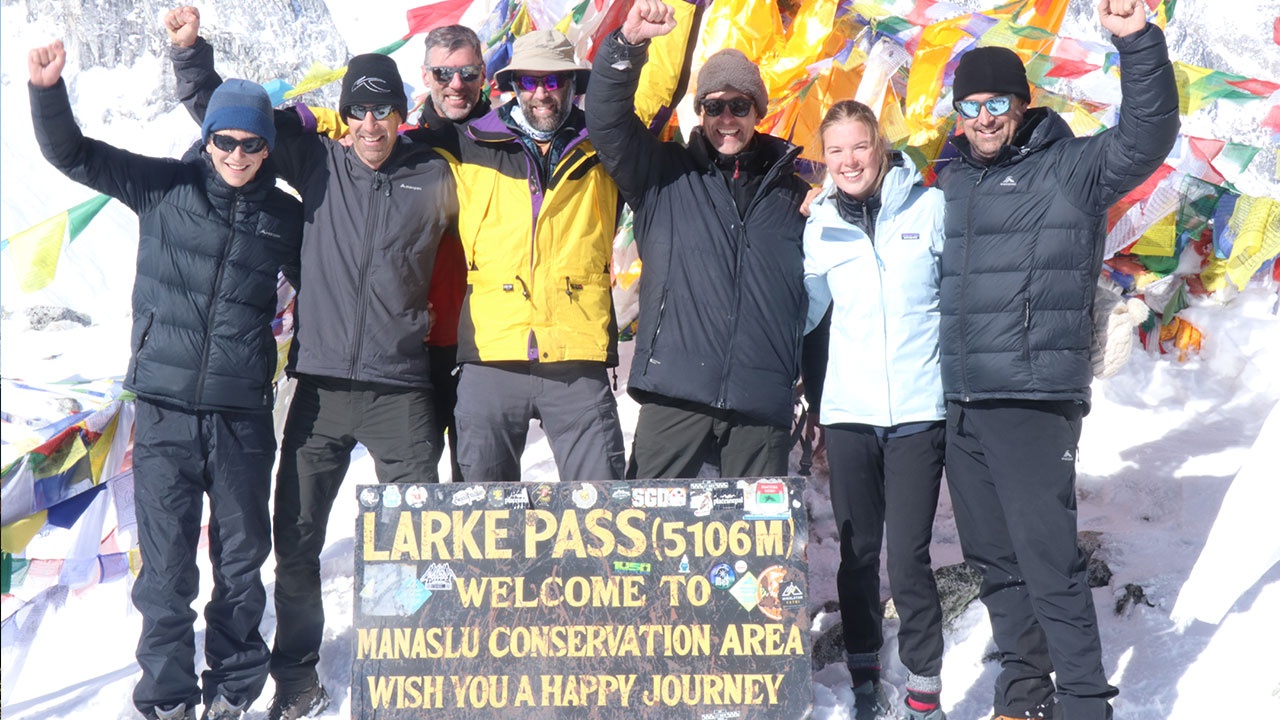
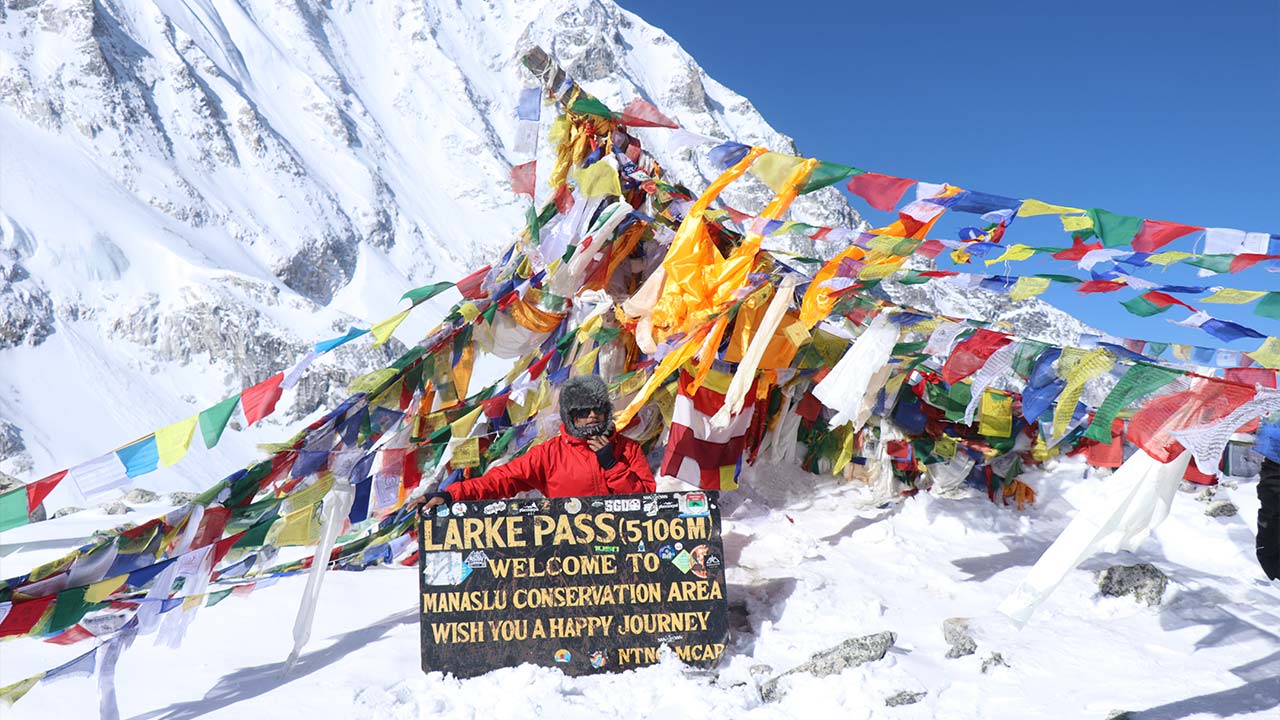
Crossing Larke La Pass (5,106m/ 16,751ft), one of the most dramatic and rewarding high mountain passes in Nepal
Traversing across the remote Budhi Gandaki Valley, where roaring rivers, narrow gorges, waterfalls, and cliff-hugging trails create one of Nepal’s most dramatic trekking corridors
Opportunity to experience authentic Tibetan-influenced mountain culture in traditional villages like Namrung, Lho, Samagaon, and Samdo, where ancient traditions still shape the lifestyle
Optional acclimatization hike to Manaslu Base Camp (4,800m/ 15,748ft) for closer glacier views and a deeper high-altitude adventure
Constantly changing landscapes from subtropical forest and terraced hills to alpine meadows, glacial valleys, and rugged high-altitude terrain, offering fresh perspectives at every angle
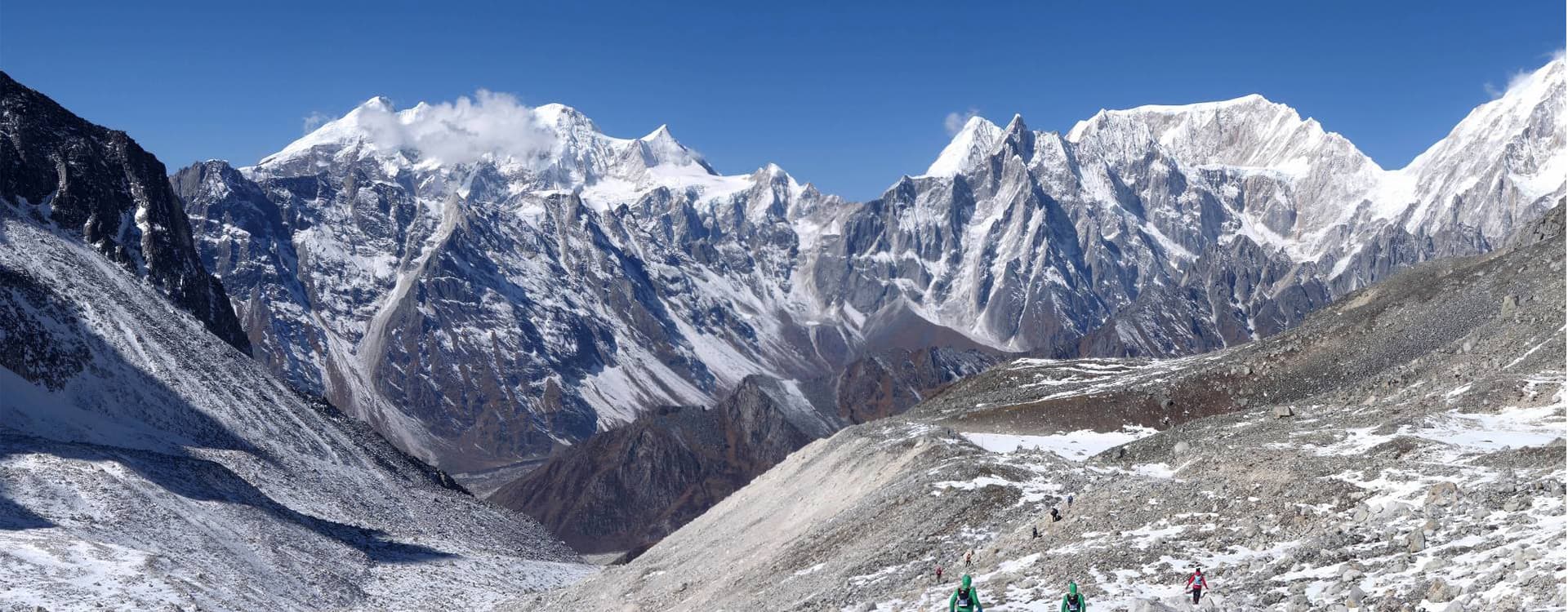
Breathtaking close-up views of stunning Himalayan peaks such as Himlung Himal, Cheo Himal, Kang Guru, Ngadi Chuli, Ganesh Himal, Himla Chuli, and Annapurna II, including the world’s eighth-highest peak, Mount Manaslu
Fewer crowds compared to popular routes like the Everest Base Camp Trek and the Annapurna Circuit Trek, which make the journey feel more peaceful, raw, and authentic
A perfect balance of adventure, culture, high-altitude challenge, and time efficiency in one unforgettable Himalayan endeavour
Trip Overview
The Short Manaslu Circuit Trek is a compact yet incredibly rewarding Himalayan journey in one of Nepal’s most rewarding restricted areas. Within just 10 days, this trek takes you deep into the Manaslu region across the roaring river gorges, traditional mountain villages, high-altitude landscapes, and one of the most dramatic mountain passes in Nepal. Unlike the commercial trekking routes that can often feel crowded and predictable, the Manaslu region still holds a sense of remoteness and raw Himalayan aspects that many trekkers actively seek. The balance this itinerary plan offers makes the journey quite appealing.
You will be able to enjoy the defining experience that makes the Manaslu region special: remote mountain terrain, unspoiled culture, a sense of isolation, and a high-altitude challenge. All of it in a shorter duration without committing to the longer standard itinerary. Unlike the major commercial routes like the Everest Base Camp Trek and the Annapurna Circuit Trek, during the Short Manaslu Circuit Trek, you can expect a serene and less crowded experience. All thanks to the restricted status of this remote Himalayan zone. So, you will be able to enjoy a rewarding journey where the focus shifts from tourism infrastructure to the natural and cultural richness of the Himalayas.
Manaslu Circuit Trek short is ideal for those who are seeking a high-altitude challenge within a shorter timeframe. This Himalaya odyssey combines adventure, cultural depth, and dramatic Himalayan scenery into a well-paced itinerary. If you are booking for something more remote and authentic without extending the trip duration for several weeks, this short Manaslu Circuit itinerary is an ideal deal for you. The rare and rewarding combination this adventure offers can only be matched by a few trekking routes in the Himalayas.
Manaslu Circuit Trek Itinerary Outline
The Short Manaslu Circuit Trek follows a compact 10-day itinerary plan that is designed for trekkers who want to experience the complete Manaslu Circuit without committing to a longer plan. Despite being a shorter variation, this itinerary still covers all the major highlights of the region. The Manaslu Circuit Trek itinerary outline below gives you a quick and practical breakdown of what each day of your trek looks like.
This table gives you a clear snapshot of your daily destinations, elevation gain/loss, trekking distance, and walking hours on each day.
Day
Short Manaslu Circuit Trek Itinerary
Elevation Profile
Duration/ Distance
01
Drive from Kathmandu (1,400m/ 4,593ft) to Machha Khola (870m/ 2,854ft)
530m/ 1,738ft (loss)
Drive Distance: 165km/ 102 miles
Drive Duration: 7 to 8 hours
02
Trek from Machha Khola to Jagat (1,290m/ 4,232ft)
420m/ 1,377ft (gain)
Trek Distance: 22.2km/ 13.79 miles
Trek Duration: 6 to 7 hours
03
Jagat to Deng (1,860m/ 6,102ft)
570m/ 1,870ft (gain)
Trek Distance: 19.9km/ 12.36 miles
Trek Duration: 7 to 8 hours
04
Trekking to Namrung (2,660m/ 8,727ft)
800m/ 2,624ft (gain)
Trek Distance: 19.5km/ 12.11 miles
Trek Duration: 5 to 6 hours
05
Namrung to Samagaon (3,530m/ 11,581ft)
870m/ 2,854ft (gain)
Trek Distance: 20km/ 12.42 miles
Trek Duration: 7 to 8 hours
06
Rest and acclimatization at Samagaon
07
Samagaon to Dharmasala (4,460m/ 14,632ft)
930m/ 3,051ft (gain)
Trek Distance: 14.8km/ 9.1 miles
Trek Duration: 7 to 8 hours
08
Trekking from Dharmasala to Bimthang (3,590m/ 11,778ft) via Larke La Pass (5,106m/ 16,751ft)
646m/ 2,119ft (gain)
Trek Distance: 24.7km/ 15.34 miles
Trek Duration: 7 to 8 hours
09
Bimthang to Dharapani (1,860m/ 6,102ft)
1,730m/ 5,675ft (loss)
Trek Distance: 23km/ 14.29 miles
Trek Duration: 7 to 8 hours
10
Drive back to Kathmandu (1,400m/ 4,593ft)
330m/ 1,082ft (loss)
Drive Distance: 224km/ 139 miles
Drive Duration: 7 to 8 hours
Cost Details
What's Included in Short Manaslu Circuit Trek
Three times meals (Breakfast, Lunch and Dinner) during the trek.
Trekking lodge (Tea House) accommodations during the trek.
A highly experience and helpful guide including his all expenses.
All necessary permits Manaslu and Annapurna Conservation Area.
Manaslu Restricted permit.
Manaslu Conservation Permit.
Annapurna Conservation Area Permit.
Transportation: Kathmandu to Machhakhola and Dharapani to Kathmandu by sharing Jeep/ bus.
Medical supplies (first aid kit will be available) provide by company.
Emergency Helicopter service will be paid by your Travel Insurance.
Use of Sleeping bags, Down Jacket and Duffel bag will be provided (if you needed, to be returned after the trip).
Official expenses.
Short Manaslu Circuit trek route map.
Assistance guide group size 5 +.
What's Excluded in Short Manaslu Circuit Trek
Meals in City (lunch and dinner).
Hotel in Kathmandu.
Porter if needed($220)
Your personal expenses.
All kind of soft and hard drinks.
Nepal entry visa and international airfare.
Private transports.
Price & Availability
Group Discount Available
1 Person
US$ 910
2 - 5 Person
US$ 725
6 - 10 Person
US$ 675
Itinerary of Short Manaslu Circuit Trek - 10 days
Day 01
Drive from Kathmandu (1,400m/ 4,593ft) to Machha Khola (870m/ 2,854ft): 7 to 8 hours
Destination: Machha Khola
Altitude: 870m
Overnight: Machha Khola
On this first day of your Short Manaslu Circuit Trek itinerary, you will drive out of Kathmandu. The drive takes you across busy roads, scattered suburbs, and gradually descends toward the Trishuli corridor. Once you drive past Dhading Besi and head toward Arughat, the journey shifts from standard highway drive into something more rugged. Arughat acts as one of the key transition points in this drive. This is the last major settlement with a proper bazaar feel before the road narrows down and the terrain becomes more raw.
You will continue driving toward Soti Khola, which is a key landmark that marks your entry into the Budhi Gandaki Valley. Beyond Soti Khola, the road becomes rough, uneven, and at times is carved into the cliffside. Then, the drive continues across Labubesi Village, a small Gurung Village that is surrounded by terraced fields. Waterfalls cut across the road, and landslide-prone areas are common. But the Budhi Gandaki River stays constantly in view, sometimes calm and sometimes aggressively churning below.
Then, finally, you will arrive at your overnight destination. Machha Khola itself is a small riverside settlement. It does not have a destination feel; it is more like a pause before the trek begins. Still, by this part of the journey, you are already introduced to remoteness and the mountainside beauty. From here onwards, everything slows down to a foot pace.
Max. Elevation:930
Duration:7-8 hrs
Distance:165km
Day 02
Trek from Machha Khola to Jagat (1,290m/ 4,232ft): 6 to 7 hours
Destination: Jagat
Altitude: 1,290m
Overnight: Tea House
This is the first day of trekking in your Manaslu Circuit Trek, and it immediately introduces you to the uneven rhythm. You will begin your walk by following the Budhi Gandaki River upstream. You will cross your first suspension bridge as you head toward Khorlabesi Village, a beautiful settlement tucked between steep valley walls. As you continue walking further, you will arrive at Tatopani, a notable stop along the Manaslu Circuit route.
Historically, this place is known for its natural hot springs, one of those destinations that trekkers look forward to. From here, the trail climbs toward Dobhan Village, where two rivers intersect. You will notice the shift in terrain; it starts getting tighter with steeper rock faces and narrower walking paths. The trekking route continues toward Thulo Dunga, a recognizable section that is marked by a large rock formation. From here, you will continue walking toward Yaru Khola and cross a suspension bridge.
In the last stretch of the trail, you will begin a sustained climb toward Jagat. This village is an official entry point into the Manaslu Conservation Area. Jagat is well-structured with stone-paved paths, tightly packed houses, and a checkpoint where your permits are verified. After a varied first day, Jagat feels like a proper arrival point into the core of the Manaslu trekking region.
Max. Elevation:1290
Duration:7-8 hrs
Distance:22.2 km
Day 03
Jagat to Deng (1,860m/ 6,102ft): 7 to 8 hours
Destination: Deng
Overnight: Tea House
From Jagat Village, the Manaslu Circuit Trek route starts to feel more defined, both culturally and geographically. First, you will follow a steady climb toward Salleri from where you can enjoy open views of the surrounding hills. Then, you will make your descent toward Sirdibas. This village introduces subtle cultural changes with its mani walls, chortens, and prayer flags, which appear frequently en route. The trail then continues toward Philim Village, one of the larger and more developed villages in the region.
Beyond this point, the trail splits toward the Tsum Valley, but you will stay on the Manaslu Circuit route and head deeper into a narrow and forested valley. This path will take you across Ekle Bhatti, a small but well-known stop before entering the bamboo forest. You will cross multiple suspension bridges along this ridge as the terrain becomes more layered. The final approach to Deng is long but doesn’t feel particularly steep.
Deng is a small and quiet village that welcomes you with Tibetan culture and a serene ambiance. Your arrival here marks a clear progression. Now, you have moved beyond the lower valleys and climbed to higher stretches where the Tibetan culture is prominent.
Max. Elevation:1860
Duration:7-8 hrs
Distance:19.9km
Day 04
Trekking to Namrung (2,660m/ 8,727ft): 5 to 6 hours
Destination: Namrung
Overnight: Tea House
You will leave Deng Village after enjoying a warm breakfast. On this day of your Manaslu Circuit Trek short, the trail crosses the Budhi Gandaki River early on and weaves through a series of compact and culturally distinct villages that feel noticeably more Tibetan in character. You will then continue pushing toward Bihi Phedi, a small junction village along the route. Then, on the next part, you will head toward Ghap Village, which sits quietly among the dense forest sections.
This segment feels different not only visually but atmospherically as well. The valleys then start to narrow down, the forest thickens, and the walking trail becomes more enclosed. As you continue heading higher, you will reach Prok Village. It is slightly off the main Manaslu Circuit trail, but it offers stunning views of Manaslu, Sringi Himal, and Nagadi Chuli. The trail then continues to climb through alpine forest, taking you across suspension bridges, mani walls, and chortens.
As you arrive in Namrung, the environment opens up slightly. This is one of the well-structured villages in this route, with better-developed teahouses and a strong Tibetan Buddhism influence in both architecture and daily life. This is also the point where you will feel altitude more clearly, not extremely, but it will be noticeable in your breathing and pace.
Max. Elevation:2660
Duration:5-6 hrs
Distance:19.5 km
Day 05
Namrung to Samagaon (3,530m/ 11,581ft): 7 to 8 hours
Destination: Samagaon
Overnight: Tea house
This is considered one of the most visually rewarding days of the Short Manaslu Circuit Trek itinerary. This day is defined by not a single viewpoint but by how the landscape evolves continuously as you climb higher. You will begin your trek with a steady climb toward Lho Village, you will pass the beautiful village of Lihi and Sho along the way. On this stretch, the mountain's presence finally reveals itself more clearly. Manaslu begins to dominate the skyline, especially near Ribung Monastery.
From Lho, the trail continues toward Shyala Village, one of the most scenic open sections of the trek. Unlike the tight valleys of earlier days, Shyala opens into a wide glacial basin and is surrounded by peaks in multiple directions. You are no longer just walking through the terrain; you are now walking within a high mountain landscape. Then, you will continue walking toward Samagaon following a gradual but long stretch.
Samagaon is a large and spread-out village that sits at the base of Mount Manaslu. It is one of the most important acclimatization points on the trek. Many trekkers stop here, not just because of the altitude, but also because of its access to side hikes and cultural landmarks. Your arrival here marks the complete shift in the environment. It is no longer mid-hills Nepal; this is high Himalayan terrain, both visually and culturally.
Max. Elevation:3530
Duration:7-8 hrs
Distance:18.6 km
Day 06
Rest and acclimatization at Samagaon
Rest and Acclimatization Day
The acclimatization days on the Manaslu Circuit Trek are not about staying still. They are actually about moving smartly, gaining altitude during the day, and returning to a lower altitude for sleep. You can take several key acclimatization hikes from Samagaon, each of which offers a different perspective of the region. The most common hike is toward Manaslu Base Camp, which takes you higher into the glacial terrain and rewards you with dramatic up-close views of Manaslu.
Another popular option is a hike to Birenda Lake, a glacial lake that is located below Manaslu glacier. It is shorter and less demanding, but it is still valuable for acclimatization and offers a stark and surreal landscape with ice, rock, and still water. Or, you can hike toward Pungyen Gompa, which is on the opposite side of the valley. This hiking route is quieter and less traveled, which gives you a more isolated sense compared to other main acclimatization paths.
The key here is not where you go; it is more about how you manage your effort. Altitude by this point is a real factor. Even simple walks feel heavier, breathing becomes more deliberate, and pacing matters more than distance. By the end of this day, your body starts to adapt. At the same time, you will gain a deeper understanding of the terrain you are about to cross.
Max. Elevation:3530
Day 07
Samagaon to Dharmasala (4,460m/ 14,632ft): 7 to 8 hours
Destination: Dharmasala
Overnight: Tea House
This day of your Short Manaslu Circuit Trek itinerary marks the transition into the high altitude crossing phase. Now, you are no longer moving between villages, but you are moving toward the Larke La approach. As you leave Samagaon, the trail passes across the long mani walls and wide grazing areas where yaks can be commonly sighted. The valley feels border here, but it is also more exposed. Vegetation is sparse, and the landscape shifts toward rock and alpine terrain.
You will then arrive at Samdo Village, the last major village before the pass. It sits close to the Tibetan border and has a distinctly different feel. Samdo feels more remote, quieter, and heavily influenced by cross-border culture and trade. From Samdo, the trail continues toward Larkya Bazaar, a seasonal trading point that historically connects Nepal and Tibet. Then, the path gradually climbs toward Dharmasala, which is also known as Larke Phedi.
The altitude now is significant, and even though the gradient is not extreme, the lack of oxygen makes every step feel heavier. Dharamshala is not a traditional village; it is more of a high-altitude stop with basic accommodation. It is positioned strategically before the Larke La Pass, crossing the next day. Now, you are fully committed to the high Himalayan phase of the Manaslu Circuit.
Max. Elevation:4460
Duration:3-4 hrs
Distance:6.1 km
Day 08
Trekking from Dharmasala to Bimthang (3,590m/ 11,778ft) via Larke La Pass (5,106m/ 16,751ft): 7 to 8 hours
Destination: Bimthang
Overnight: Tea House
This is the most demanding and defining day of your entire Short Manaslu Circuit Trek. You will start your trek early in the morning, before sunrise. This is essential to cross the pass because timing and weather are equally important as physical effort. The trail climbs steadily above Dharamsala, taking you across glacial moraine. There are no villages here; you will pass small landmarks like Larkya Glacier viewpoints and scattered cairns that guide your way through this high open terrain.
As you gain altitude, the climb becomes more gradual but also exhausting. The thin air slows your pace, and even short distances feel stretched. At the top, Larke La Pass is marked by widespread prayer flags, and on clear days, the views of the Himalayas open dramatically. From here, you will be able to catch stunning views of Manaslu, Himlung Himal, Cheo Himal, Kang Guru, Annapurna II, and other surrounding peaks. After enjoying the views and relishing the high Himalayan atmosphere from the top of this major pass, you will then make your descent toward Bimthang.
This descent toward Bimthang is long, steep, and harder on your knees. You will move down across the snow slopes, then into rocky terrain and gradually reconnect with vegetation. During the final stretch, you will pass through the sections near the base of the glacier before finally reaching Bimthang. After a long and demanding journey, Bimthang feels like a relief. It is one of the most satisfying arrivals on this trek, not because of the luxury, but because of the contrast.
Max. Elevation:3590
Duration:8-9 hrs
Distance:24.7 km
Day 09
Bimthang to Dharapani (1,860m/ 6,102ft): 7 to 8 hours
Destination: Dharapani
Overnight: Tea house
After the intensity of the past, this day feels like a release, both physically and mentally. On this final day of trekking in your Short Manaslu Circuit Trek itinerary, the altitude drops significantly, and breathing becomes easier. You will begin your day with a warm and nourishing breakfast at Bimthang. Following the descending path, you will walk through alpine meadows before entering rhododendron and pine forests. You will then pass Hompuk Village, a quiet stop surrounded by forest.
Then, the walk continues toward Sangure Kharka, where the valleys begin to widen again. As you walk lower, you will arrive at Gho Village, a small settlement that marks a clear return to more settled terrain. From here, the trail continues toward Tilje, one of the more established villages on the side of the Manaslu Circuit with a stronger connection to the Annapurna trekking network. The final stretch toward Dharapani follows a more defined trail, eventually linking with the Annapurna Circuit Trek route.
Dharapani is a busy junction compared to everything that you have experienced over the past few days. This village has better infrastructure, more trekkers, and a noticeable shift back toward accessibility. Reaching Dharapani feels like re-entering the outside world after days of isolation in the remote Manaslu region.
Max. Elevation:1963
Duration:8-9 hrs
Distance:19 km
Day 10
Drive back to Kathmandu (1,400m/ 4,593ft): 7 to 8 hours
Final day and return back to Kathmandu
The final day of your short Manaslu Circuit Trek is a long return journey back to Kathmandu. But, it is a different feeling compared to Day 01; you are no longer entering the trek, you are leaving it behind with a full understanding of this remote route. From Dharapani, the drive connects through Besisahar, a major gateway town for the Annapurna region. This stretch is relatively smoother compared to the rugged roads on the Manaslu side, although it is still long and winding.
As your drive continues, the landscape gradually shifts back to familiar mid-hill scenery: terraced farms, rivers, and scattered settlements. The mountains start to fade into the background and are replaced by hills and eventually the outskirts of Kathmandu. By the time you reach Kathmandu, the transition feels complete. Your arrival back in the capital marks a full loop through one of Nepal’s most isolated and culturally rich trekking regions.
Max. Elevation:1400
Duration:9-10 hrs
Distance:118km
If the provided schedule isn't suitable for you, we can create personalized travel arrangements.
The Short Manaslu Circuit Trek is labeled as a moderate to challenging level of Himalayan adventure. It is not a technical climb; there are no ropes or exposure that requires mountaineering skills. However, this journey demands a solid level of endurance and consistency over multiple days. You will be walking around for 6 to 8 hours on most trekking days. What makes this trek feel tougher than many other “moderate” routes is the compressed nature of the short itinerary.
Unlike the longer version of the Manaslu Circuit Trek Nepal, where altitude gain is more spread out, this short trekking itinerary pushes you higher in fewer days. You will traverse from the lower river valleys of Machha Khola and Jagat into high-altitude zones like Samagaon and Dharmasala pretty quickly. This means your body has less time to adjust, making acclimatization days, especially at Samagaon, very critical. The terrain itself adds another layer of challenge. In the lower sections, the trail constantly rises and falls along the Budhi Gandaki River. You will also have to walk across frequent suspension bridge crossings, stone staircases, and narrow paths carved into steep valley walls.
As you move higher past Namrung and toward Samagaon, the trail becomes more gradual but longer. Likewise, the rise in altitude begins to slow you down. Simple distances begin to feel stretched, and pacing becomes more important than speed. The most demanding section is the crossing of Larkya La Pass (5,106m/ 16,751ft). This day is long, physically draining, and heavily influenced by altitude. The climb itself is steady rather than steep, but the thin air makes every step harder. The descent afterward is also equally taxing, especially on tired legs.
Weather and trail conditions can also influence the Short Manaslu Circuit Trek difficulty. Early mornings at higher elevations can be freezing, and depending on the season, sections near the pass may involve snow or icy trails. Lower sections, on the other hand, can feel humid and hot, especially during pre-monsoon periods. This constant variation means your body has to adjust to the changing environments as well.
To sum it up, the Manaslu Circuit Trek Short is best suited for trekkers with good physical fitness and some prior hiking experience. It is not an ideal journey for a beginner unless you are well-prepared and comfortable with long walking days. With proper pacing, acclimatization, and realistic expectations, it’s a demanding but very achievable trek. If you are prepared for this journey, it will not reward you with just views, but also with a deeper sense of progression through increasingly remote and high-altitude terrain.
Best Season for Manaslu Circuit Trek
If you are planning the Short Manaslu Circuit Trek, you need to understand that timing plays a much bigger role than most people expect. Setting the right time of the trek is not just about clear views; it directly affects trail safety, pass conditions, and overall trekking comfort. Ideally, the best season for Manaslu Circuit Trek is spring (March to May) and autumn (September to November). These windows offer the most stable weather, clearer skies, and reliable conditions, especially important for crossing Larkya La Pass.
Spring (March to May):
Spring is one of the most visually rewarding times to do this trek. As winter recedes, the lower sections of the trail begin to come alive with greenery and blooming rhododendron forests. Temperatures are moderate, with warm days in the lower valleys and cooler, manageable conditions as you gain altitude. What makes spring particularly favorable for Manaslu is the balance; it is warm enough for comfortable trekking, yet stable enough for high-altitude sections.
The mornings usually offer clear mountain views, while afternoons may bring some cloud buildup. At the higher parts of the trail near Dharmasala and Larkya La, there may still be patches of snow early in spring. However, they are generally manageable with proper timing.
Daytime Temperatures: 10°C to 25°C
Nighttime Temperatures: 6°C to -10°C
Autumn (September to November):
Autumn is widely considered the best overall season for the Short Manaslu Circuit Trekking. After the monsoon clears, the air becomes crisp and clean; this condition will offer you some of the sharpest mountain visibility of the year. Autumn is the period when the views of Manaslu and the surrounding peaks feel at their most defined. The trail conditions are also at their most reliable during this season.
The paths are dry, river levels are more predictable, and the risk of landslides is significantly lower compared to monsoon months. Temperatures are also stable, cool in the mornings and evenings. They are comfortable for long trekking hours during the day. For a route that involves a high-altitude pass crossing, this level of predictability makes a noticeable difference in both safety and overall experience.
Daytime Temperatures: 7°C to 23°C
Nighttime Temperatures: 4°C to -10°C
Winter (December to February):
Trekking the Manaslu Circuit in winter is possible, but it comes with clear challenges. As you climb higher, temperatures drop significantly, and snow accumulation becomes a real factor. The biggest concern during the winter trek is Larkya La Pass, which can become difficult or even inaccessible after heavy snowfall. That said, winter offers a very different experience.
The trails are quieter, the air is incredibly clear, and the landscapes have an untouched and raw quality. Winter Manaslu Circuit Trekking is best suited for those who are comfortable with cold conditions and are flexible enough to adjust plans if there are any weather-related complications.
Daytime Temperatures: 5°C to 15°C
Nighttime Temperatures: -15°C to -20°C
Monsoon (June to August):
Monsoon is generally the least recommended season for any trek in Nepal, which goes for the Manaslu Circuit Trek Short as well. Heavy rainfall affects the lower sections of the trek, particularly between Soti Khola, Machha Khola, and Jagat. Trails become muddy and slippery, landslides are more common, and river crossings can be unpredictable. On top of that, leeches are also present in forested sections.
This can make the forest traverse feel annoying. Furthermore, loud cover often blocks mountain views, which reduces one of the main highlights of the trek. However, the monsoon is not entirely without appeal. The landscape becomes intensely green, waterfalls are at their fullest, and the trail sees very few trekkers. If you don’t mind wet conditions and are prepared for delays, the monsoon offers a quieter, more isolated version of the Manaslu experience.
Daytime Temperatures: 15°C to 30°C
Nighttime Temperatures: 0°C to 5°C
Packing List
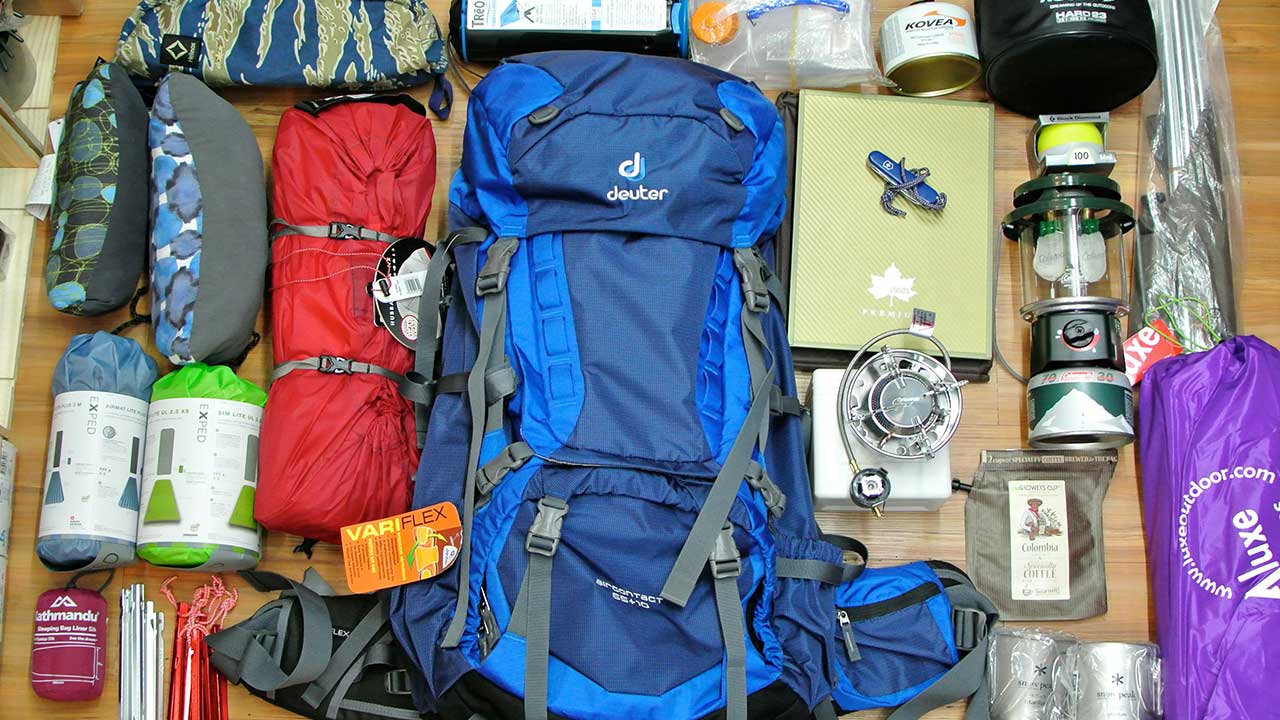
The Short Manaslu Circuit Trek is not just about distance; it also takes you across changing environments. You move from humid river valleys to cold alpine terrain within a few days. By the time you approach Larke La Pass, conditions can feel closer to a high-altitude expedition than a typical trek. That is why your packing needs to be practical, layered, and reliable rather than excessive.
This is not a technical climb, so you will not need specialized mountaineering gear. But because of the altitude, remoteness, and long trekking days, what you carry directly affects your comfort, safety, and overall experience. Your goal should be to pack light, but don’t cut essentials. Here is a well-balanced packing list designed specifically for the Short Manaslu Circuit.
Clothing
Thermal base layers (top and bottom)
Moisture-wicking trekking shirts
Insulating mid-layer (fleece or lightweight down)
Warm down or insulated jacket
Waterproof and windproof outer shell (jacket and pants)
Lightweight trekking pants
Warm hat/beanie for cold mornings and evenings
Sun hat or cap for lower sections
Neck gaiter or buff (useful for dust, wind, and cold)
Lightweight gloves for daily use
Insulated gloves for high-altitude sections
Footwear
Sturdy trekking boots (well broken-in, with good ankle support)
Comfortable camp shoes or sandals
Warm trekking socks (3 to 5 pairs, preferably wool or synthetic)
Optional gaiters (useful near the pass if snow is present)
Sunscreen (high SPF) and lip balm with UV protection
Hand sanitizer and wet wipes
Quick-dry towel
Toilet paper and tissues
Personal first aid kit (bandages, pain relief, altitude medication if needed)
Any prescribed medication
Blister care
Water purification tablets or a filter
Small waste bags for personal trash
Trekking Gear
Trekking poles (highly recommended)
Backpack (25 to 35L for daily essentials)
Duffel bag (if using porter support)
Sleeping bag (rated for cold temperatures, rated to at least -10°C to -15°C )
Reusable water bottles or hydration bladders
Thermos flask (very useful at higher altitudes)
Headlamp with spare batteries
UV-protection sunglasses (important for snow glare near the pass)
Power bank or extra batteries (charging is limited and often paid)
Waterproof covers for backpack and duffel
The key to packing for Manaslu is not just ticking items off a list; it is about understanding when and where you will need them. Lower sections like Machha Khola and Jagat can feel warm and humid, while places like Dharmasala and the Larkya La crossing demand full cold-weather protection. Thus, a smart, layered packing strategy ensures you are prepared for the variations, without carrying unnecessary weight the entire way.
The accommodation on the Short Manaslu Circuit Trek is based entirely on local teahouses, and this is where the trek feels most grounded. Unlike more commercial routes, the Manaslu region still leans toward simple and family-run lodges that reflect the daily life of the villages rather than tourism-driven infrastructure. From lower stops like Machha Khola and Jagat to higher settlements such as Namrung and Samagaon, teahouses are spaced along the trail in key villages.
You can expect twin-sharing rooms with wooden beds, basic mattresses, pillows, and blankets in a standard setup. Comfort is decent in the lower sections, but as you move higher, especially beyond Samagaon toward Dharmasala, facilities become more limited and functional. Heating is typically available only in the common dining area, usually around a central stove, which becomes the social and resting space in the evenings.
Bedrooms are not heated, so a proper sleeping bag becomes essential, particularly as you approach Larkya La Pass, where nights are significantly colder. Bathrooms are shared in most teahouses. In lower villages, you will often find more standard setups, while higher up, facilities can be basic. Hot showers are also available in some places, mainly at lower and mid-altitudes. However, they come at an extra cost and depend heavily on water availability and weather conditions.
Food and Beverage
Food along this remote Himalayan route is simple, filling, and designed to support long trekking days and altitude adaptation. While the variety is slightly more limited compared to Everest or Annapurna, you will still find a reliable range of meals across villages along the route. The meals are prepared fresh at the teahouses, often using locally sourced ingredients where possible. As you move higher, the menu becomes more limited, but the focus remains on carbohydrate-rich, warm, and easy-to-digest food.
Typical Breakfast Options:
Tibetan bread or chapati
Eggs (boiled, fried, scrambled, omelette)
Toast or simple bread with jam and peanut butter
Pancakes
Porridge (oats, rice, or barley-based)
Muesli or basic cereals
Tea or coffee alongside meals
Lunch and Dinner Options:
Dal bhat (rice, lentils, vegetables, staple meal with free refills)
Noodles (soups or stir-fried styles)
Fried rice or plain rice dishes
Pasta or macaroni
Chowmein
Potatoes (boiled, fried, or curry)
Momos
Soups (vegetable, garlic, or noodle-based, especially popular at altitude)
Basic pizza or spaghetti (more common in lower villages like Jagat or Namrung)
Beverages:
Tea (black, milk, ginger, lemon, or herbal)
Coffee (mostly instant, sometimes brewed in larger villages)
Hot lemon, ginger, or honey drinks
Boiled or filtered drinking water
Hot chocolate
Soft drinks (available in lower and mid-altitude villages)
Limited local alcoholic drinks (less common at higher elevations)
Training and Preparation
Preparing for the Short Manaslu Circuit Trek is not just about being fit enough. It is about preparing yourself for long, continuous trekking days, fast altitude gain, and a demanding high-pass crossing. Because this is a shorter itinerary, your body has less time to adapt naturally, which makes preparation even more crucial. From a physical standpoint, your focus should be on cardiovascular endurance, leg strength, and overall stamina.
During this remote Himalayan exploration, you will be walking 6 to 8 hours a day on mixed terrain, stone steps, forest trails, river valleys, and high-altitude paths. Activities like running, brisk walking, cycling, and stair climbing help build the kind of endurance you will rely on daily. At the same time, strength training, especially squats, lunges, step-ups, and core work, prepares your body for sustained ascents and long descents, particularly after crossing Larkya La Pass.
One of the most effective ways to prepare is by practicing with a loaded backpack. Even short hikes around nearby hills, carrying 5 to 8 kg, can make a noticeable difference. It conditions your shoulders, improves balance, and gives you a realistic sense of how your body responds over time. If possible, include back-to-back hiking days in your training; this will help to simulate the fatigue you feel during the trek.
Typically, a 3 to 6 week training window is usually enough for most trekkers, depending on your starting fitness level. The goal is not extreme performance; it is consistency. Being able to move steadily for hours without exhausting yourself matters far more than speed.
Mental Preparation
Mental preparation is just as important as physical preparation, especially for a route like the Short Manaslu Circuit Trekking. This trek involves remote villages, limited facilities, and long stretches without immediate comfort. Days like the push from Samagaon to Dharmasala or the crossing of Larkya La can feel mentally draining, not just physically demanding.
Building mental readiness will make you comfortable with pacing, accepting slower progress at altitude, and staying patient when conditions are not ideal. Simple habits, like breaking the day into smaller sections, focusing on steady breathing, and maintaining a calm rhythm, can make a big difference when the trail feels long.
When both your body and mindset are prepared, the experience changes completely. Instead of struggling through each day, you will move with control and awareness, able to handle the challenges and actually take in what the Manaslu region offers rather than just pushing through it.
Necessary Permits
The Short Manaslu Circuit Trek takes you across a restricted and protected Himalayan region, which means permits are strictly regulated and mandatory. Compared to simpler treks, the permit process here is more structured, and you cannot legally trek this route without proper documentation. You will need the following permits for this trek:
Permits Required for Manaslu Circuit Trek
Manaslu Restricted Area Permit (MRAP)
Manaslu Conservation Area Permit (MCAP)
Annapurna Conservation Area Permit (ACAP)
The Restricted Area Permit (RAP) is the most important one. The stretches between Jagat and Dharapani are restricted areas of this trek, especially due to their proximity to the Tibetan border. The MCAP covers the conservation area from the early part of the trek up to the Larkya La region. As for the ACAP, it is essential after crossing the pass, as the trail descends toward Dharapani and connects with the Annapurna region.
Important Things to Know
Unlike treks such as the Everest Base Camp Trek and the Annapurna Circuit Trek, the Manaslu Circuit has stricter rules:
You must trek with a licensed guide
A minimum of two trekkers is required (solo trekking is not permitted under RAP rules)
Permits cannot be issued individually; they must be arranged through a registered trekking agency
Because of this, most trekkers organize their permits as part of a package. The agency handles the paperwork, which removes the complexity and ensures everything is in place before you start.
Is This Trek Suitable for Beginners?
The Short Manaslu Circuit Trek can be done by beginners, but the journey comes with important conditions. This circuit route is not the easiest introduction to trekking in Nepal, and it feels significantly more demanding than beginner-friendly routes like the Ghorepani Poon Hill Trek. The biggest challenge for beginners is the compressed itinerary. In the full Manaslu Circuit, trekkers usually have more days to spread out elevation gain and recovery. However, in this shorter version, you will move from low-altitude villages to high-altitude locations, eventually to Larke La Pass, in a much tighter timeframe.
For someone with no trekking background, this quicker progression can feel physically and mentally overwhelming. The daily walking hours are another factor. Most trekking days range between 6 to 8 hours, and the terrain is rarely smooth. You will deal with long suspension bridge crossings, repeated ascents and descents in the lower valleys, rocky trails, and stone staircases. The high-altitude sections with gradual inclines also feel exhausting due to thinner air.
Then there’s the remoteness factor. Unlike more commercial trekking routes, the Manaslu region still feels isolated. Villages are smaller, facilities are simpler, and access to comfort is limited. If you have never experienced teahouse trekking before, this adjustment can be just as challenging as the physical side of the trek. That said, beginners who are physically prepared, mentally patient, and realistic about the challenge can absolutely complete this trek.
Many first-time trekkers succeed because they train properly, listen to their guides, maintain a slow pace, and take acclimatization seriously. This trek is best suited for beginners who:
Have a good baseline fitness level
Are comfortable walking for long hours
Have done day hikes or multi-day hikes before (even if not at altitude)
Are prepared for basic accommodations and remote conditions
Understand that trekking success is about consistency, not speed
**Note: If you are a complete beginner looking for your very first Himalayan trek, starting with something shorter and lower altitude may feel more comfortable. But if you are motivated, prepared, and want a more remote experience from the beginning, the Short Manaslu Circuit can still be an incredibly rewarding first major trek. This journey simply demands more respect and preparation than beginner-friendly alternatives**
Short Manaslu Circuit Trek Cost
The Short Manaslu Circuit Trek is generally more expensive than standard teahouse routes like the Ghorepani Poon Hill Trek or even parts of the Annapurna Circuit Trek. The pricing aspect largely comes down to its restricted area regulations, remote logistics, and mandatory guide requirements. On average, the Short Manaslu Circuit Trek costs usually range between USD 800 to USD 1,100 per person, depending on factors such as group size, trekking season, service standard, and whether transportation is private or shared.
One of the biggest pricing factors is the restricted area permit, which is mandatory for this route and costs more than the permits required for most standard treks in Nepal. In addition to that, the route requires both conservation permits and a licensed guide, which naturally increases the overall package price.
A standard Short Manaslu Circuit package typically includes: transportation, teahouse accommodation, three meals per day, necessary permits, licensed trekking guide, government taxes, and service charges. Premium packages may also include private jeep transportation, hotel stays in Kathmandu, upgraded accommodations, and additional support staff. The Short Manaslu Circuit Trek cost for such packages will be higher than the standard margin, but you will get the best services where available.
Travel Visa
If you are planning to join the trails of this short Manaslu Circuit Trek, you must enter Nepal with a valid tourist visa before beginning the journey. The good news is that the visa process in Nepal is relatively simple and straightforward for most international travelers. If you are an Indian passport holder, you do not need a tourist visa to enter Nepal. Travelers from most other countries can either obtain a visa in advance through a Nepali embassy/consulate or get a visa on arrival after landing in Tribhuvan International Airport.
Most trekkers choose the visa-on-arrival option because it is fast and convenient. After arriving in Kathmandu, you can complete the process at the immigration counters at Tribhuvan International Airport. You will generally need:
A passport with at least six months of validity
A passport-sized photo
Visa fee payment ( in major foreign currencies)
You can also complete Nepal’s online arrival form before flying, which can save time at the airport, especially during busy trekking seasons like spring and autumn. If you are entering Nepal through a land border or prefer handling paperwork in advance, applying through a Nepali embassy can be a smoother option. There are three types of Nepal Tourist Visa that you can apply for based on duration:
Nepal Tourist Visa Duration and Fees
15-Day Visa— USD 30
30-Day Visa— USD 50
90-Day Visa— USD 125
For the Short Manaslu Circuit Trek, which has an itinerary plan of 10 days, you can apply for the 15-day visa. If you have plans to explore other corners of the country, you can get a visa based on your intended period of stay. Furthermore, you will also be able to get an extension for the tourist visa. For that, you will have to get at least a 15-day extension, which costs USD 45.
Short Manaslu Circuit Trek FAQs
Short Manaslu Circuit Trek Faqs
How Long Does the Short Manaslu Circuit Trek Take?
The Short Manaslu Circuit Trek typically takes around 10 days, including the drive from Kathmandu to Machha Khola and the return drive from Dharapani back to Kathmandu. This shorter itinerary is designed for trekkers who want to complete the circuit in less time without missing out on the experience.
What is the Total Distance of the Short Manaslu Circuit Trek?
The total trekking distance is roughly 160 to 180 kilometers (100 to 112 miles), depending on your exact starting point, route variations, and side hikes during acclimatization days. This includes the full trekking section of this circuit route; the daily walking distances may vary depending on the itinerary plan.
How Difficult is the Short Manaslu Circuit Trek?
The Short Manaslu Circuit Trekking is considered a moderate to challenging level adventure. It does not require technical climbing skills, but long walking days, rapid altitude gain, and the crossing of Larkya La Pass make this trek physically demanding.
What is the Highest Point of the Short Manaslu Circuit Trek?
You will reach the highest point of the trek at Larkya La Pass, which is at an elevation of 5,106 meters (16,751 feet). This is the most challenging and rewarding section of the trek; it offers panoramic views of the surrounding Himalayan peaks.
Is the Short Manaslu Circuit Trek Suitable for Beginners?
Yes, this shorter version of Manaslu Circuit is suitable for beginners, but only if they are physically prepared and understand the challenge. This trek involves long trekking days, remote conditions, and high altitude, which can feel overwhelming for someone completely new to trekking.
Is a Guide Mandatory for the Manaslu Circuit Trek?
A licensed guide is mandatory for the Manaslu Circuit Trek. As this route passes through a restricted area, trekkers are required to book through a registered trekking agency and trek with a licensed guide.
Is Altitude Sickness Common on the Short Manaslu Circuit Trek?
There is a risk of Acute Mountain Sickness (AMS) on this short itinerary as you will gain elevation faster than standard Manaslu itineraries. Symptoms often begin above 3,000 meters; thus, proper acclimatization, hydration, and a slow walking pace are significant to reduce the risk of altitude sickness.
Can I Charge My Phone and Access Wi-fi During the Trek?
Yes, you can charge your phone and access the internet at villages along the trekking route. But the availability becomes more limited as you move higher. Beyond Samagaon, connectivity becomes less reliable, and power cuts are common. So, carrying a power bank is highly recommended.
What is the Shortest Itinerary for the Manaslu Circuit Trek?
The shortest practical itinerary is usually 10 days, which includes road transfers and the full trek over Larkya La Pass as well as an acclimatization day at Samagaon. Anything shorter often becomes too rushed and increases altitude-related risks.
What Happens if Larkya La Pass is Closed Due to Snow?
If heavy snowfall blocks Larkya La Pass, your guide may recommend waiting for conditions to improve or descending back to a safer village such as Samagaon or Samdo. In rare cases, trekkers may need to abandon the pass crossing entirely. This is why trekking in stable seasons like spring and autumn is strongly recommended for a seamless experience.
Can I Rent Trekking Gear in Kathmandu Before the Trek?
Kathmandu has many trekking shops where you can rent gear such as sleeping bags, down jackets, trekking poles, and duffel bags. Areas like Thamel are particularly popular for gear rental, and renting is a practical option if you don’t want to purchase expensive equipment for a single trek.
Is Drinking Water Safe on the Manaslu Circuit Trek?
You should not consume tap water and untreated stream water directly. Most trekkers either buy boiled water at teahouses or use water purification tablets, filters, or UV purifiers. It is best if you carry your own purification method as a safe and cost-effective option during the trek.
High-octane mountain sprint through restricted valleys and Larkya La Pass
For fit hikers on a tight timeline, this condensed 10-day loop around Mount Manaslu is an absolute adrenaline surge. We kept a sharp, steady pace through the Budhi Gandaki gorge, acclimatized properly in Samagaun, and crossed the snow-covered Larkya La Pass at 5,106 meters with zero issues. The raw, unspoiled nature of this restricted region means fewer trekkers and unspoiled Tibetan culture. The logistical execution was top-tier, ensuring every transport connection and permit was handled without a second wasted.
GGarrett Vance21st Sep, 2022
High-intensity pass crossing for experienced, fit wilderness hikers
Crossing Larkya La Pass in just ten days is a serious physical undertaking but for conditioned trekkers it is pure adrenaline. By utilizing overland jeep transfers to skip lower road construction we jumped right into the remote high valley. The wilderness feel, Tibetan cultural touches and stark mountain walls were incredible. Outstanding guide support kept our high-pass safety on point.
NNoah Brown20th Apr, 2018
Beautiful Manaslu
I had an amazing journey with Eco Holidays Nepal. I planned to go to the Manaslu Circuit, and I arranged my itinerary with Dhurba by mail, who helped me create my plan according to my requests.Thanks a lot for customizing this trek for me, and also thanks to my guide Raju for this wonderful trek.
During this trek I captured beautiful pictures and videos that will help me remember this experience for my whole life.